AMD Instinct MI350X disrupts AI hardware dominance
AMD Instinct MI355X delivers 2.1x AI performance compared to the NVIDIA B200 SXM5 180GB. These high-throughput platforms provide 2.3TB HBM3E memory capacity to support generative AI and high-performance computing workloads for hyperscalers like Meta and OpenAI.

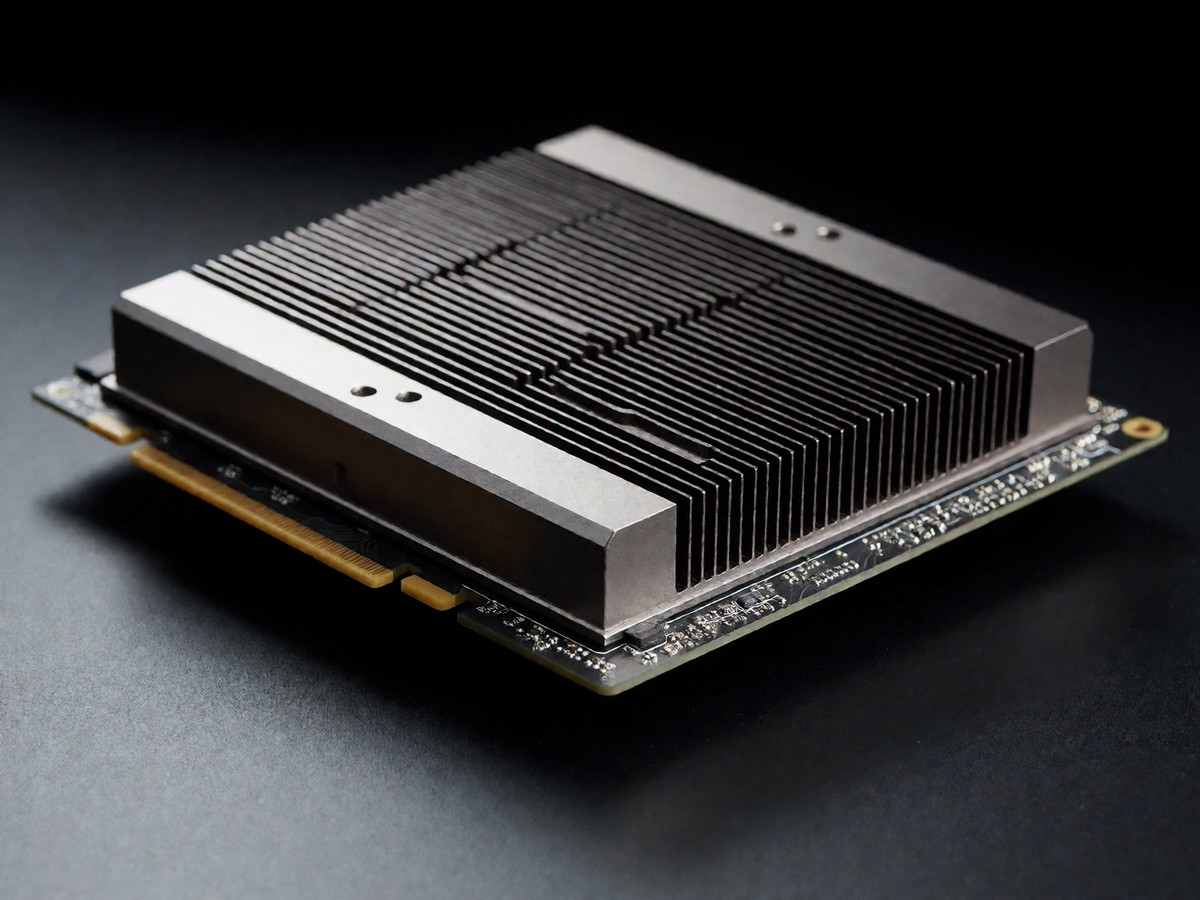
MI350X hardware performance
The MI355X OAM 288GB delivers 2.1x AI performance and 2.1x HPC performance compared to the NVIDIA B200 SXM5 180GB. AMD Instinct MI350 series platforms integrate eight fully interconnected MI355X or MI350X GPU OAM modules onto an industry-standard OCP design through 4th Gen AMD Infinity Fabric technology to assist in high-throughput AI processing. These systems provide an industry-leading 2.3TB HBM3E memory capacity for high-throughput AI processing. The MI350X series provides a 4x increase in AI compute capability and a 35x leap in inference performance over the previous generation. Support for next-generation FP6 and FP4 data types, including matrix sparsity, redefines AI acceleration for Generative AI and High-Performance Computing. The MI355X also delivers better price-performance, generating up to 40% more tokens per dollar compared to competitor solutions. These ready-to-deploy platforms support systems ranging from standard air-cooled UBB-based servers to ultra-dense Direct Liquid Cooled platforms. Leading hyperscalers and AI companies including Meta, OpenAI, Microsoft, Oracle Cloud Infrastructure, and xAI have deployed AMD Instinct GPUs. While these chips improve efficiency, ROCm still faces ecosystem gaps like fewer pre-built Docker images and less coverage in commercial training documentation compared to CUDA.
ROCm and the software ecosystem
| Feature | AMD Instinct MI300X | NVIDIA H100 (SXM / PCIe) |
|---|---|---|
| GPU Memory (HBM) | Up to 192 GB HBM3 | Up to 80 GB HBM3 |
| Memory Bandwidth | ~5.3 TB/s | ~3.3 TB/s (HBM3) |
| Peak FP16 Performance | ~1.3 PFLOPS (matrix-fused) | ~2 PFLOPS (tensor-fused) |
| Primary Ecosystem Stack | ROCm | CUDA |
Enterprises choose ROCm to reduce vendor-lock-in and gain transparency in their AI stack. ROCm includes drivers, compute runtimes, compilers, and math libraries for AMD GPUs. This software enables frameworks like PyTorch and TensorFlow to run on AMD Instinct accelerators. The MI300X allows companies to run large language models with tens of billions of parameters on a single GPU without model partitioning. This capability lowers the total cost of ownership per parameter for memory-bound workloads. The MI300X provides up to 192 GB of HBM3 memory and approximately 5.3 TB/s of memory bandwidth to facilitate large-scale training. You should consider how VRAM capacity affects your model partitioning needs when evaluating these hardware options. Although the MI300X outperforms the H100 in memory-bound generative-AI workloads, the H100 excels in throughput-optimized training on CUDA-native stacks. Dell PowerEdge servers now support AMD Instinct MI350P PCIe GPUs to help scale agentic and generative AI deployments. This Dell AI Platform uses AMD Enterprise AI Suite, AMD ROCm, and AMD Inference Server to support the full AI lifecycle. Will the maturity of ROCm finally catch up to the deep integration of CUDA?
Scaling with Diamond Cooling
Akash Systems’ Diamond Cooling technology reduces GPU and High Bandwidth Memory temperatures by up to 10C. This reduction provides 22% higher FLOPs per Watt and 15% throughput improvement in high ambient data center temperatures. This technology, originally developed for satellite systems, provides up to $1 million in incremental value per server over four years. This cooling solution, manufactured by MiTAC, works with 5th Gen AMD EPYC 9005 CPUs and AMD Pensando Pollara 400 AI NICs. Diamond has the highest thermal conductivity of any known material, removing heat 5x faster than copper, which is the industry standard material for heat management. A data center can operate with 100% less power dedicated to cooling and maintain high performance even at 120F ambient temperature. AMD reported $10.3 billion in revenue for its first-quarter fiscal 2026, a 38% year-over-year gain. The company’s first-quarter fiscal 2026 report also showed per-share earnings of $2.67, which is a 163.5% sequential rise. AMD’s three-year sales growth rate reached 14.7%, while its three-year EPS growth reached 72.5%. AMD expects its data center chip market to grow to $1 trillion by 2030. The company plans to launch the MI400 series of AI chips in 2026, alongside a complete server rack similar to the NVIDIA GB200 NVL72. AMD also signed a multiyear deal with OpenAI that brings in tens of billions of dollars in annual revenue. AMD expects earnings to rise to $20 a share in the next three to five year period. AMD has built an "M&A machine," as CEO Lisa Su stated, which includes the recent purchase of MK1 to ensure access to the software and people needed to build its AI capabilities.

Technewsdaily
Senior tech writer covering AI, gadgets and cybersecurity. Breaking down the news that matters, every day.