The shift toward Ollama 0.4 for local LLM infrastructure
Ollama version 0.4.14 introduces an API-centric workflow for managing models like Llama and Mistral via a local REST API. This platform provides developers with flexible integration options for agents, though security research by SentinelOne highlights risks from exposed servers.

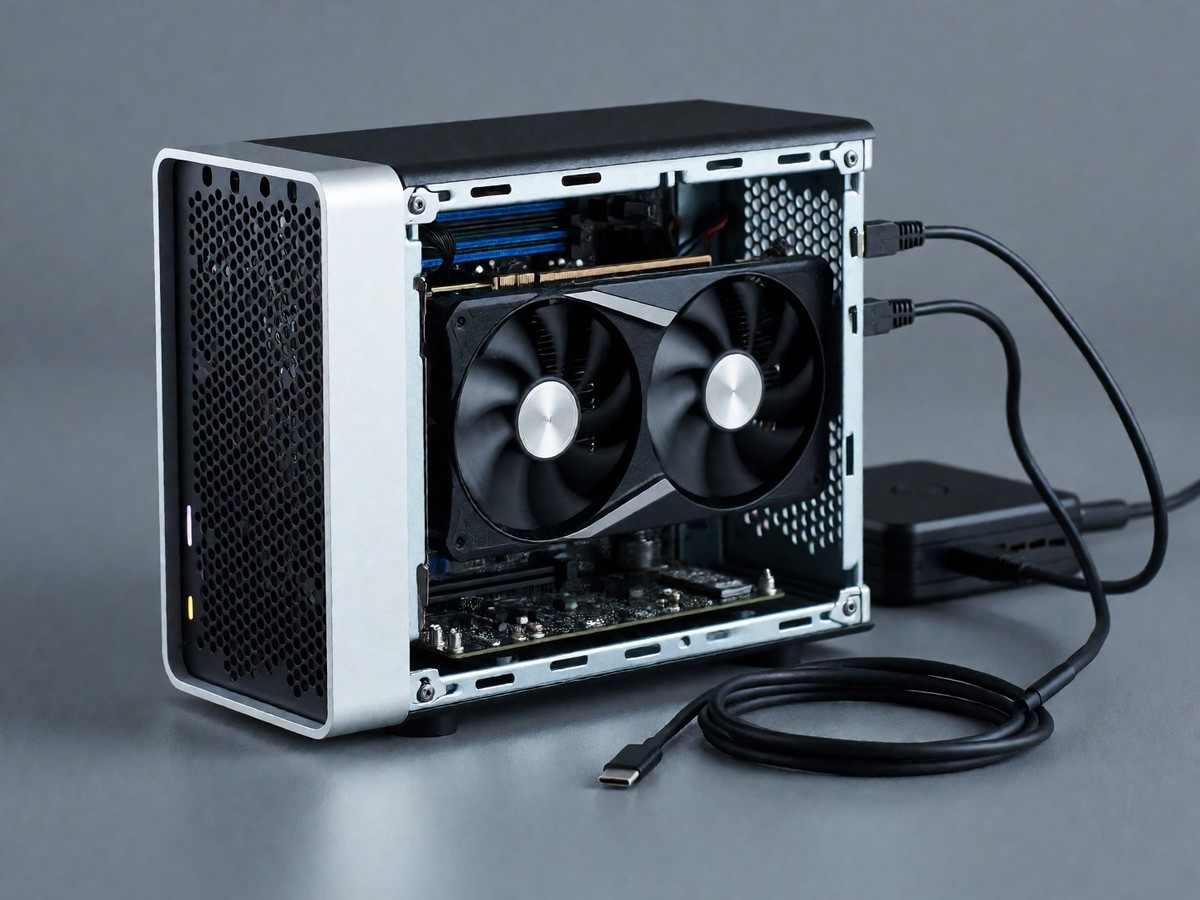
Ollama version 0.4.14, released in November 2026, changes how developers handle local LLM deployment. I see a clear distinction between this platform and desktop applications like LM Studio. While LM Studio functions as a desktop application for interacting with LLMs, Ollama provides a command-line interface, a native GUI, and a local REST API. This API operates on port 11434 and allows for the management of models like Llama, Gemma, Mistral, Qwen, GLM, and DeepSeek. Developers use client libraries in Python and JavaScript to run these models. They can also run models directly from the command line or through a Docker image. This flexibility allows the software to integrate with agents such as Claude Code, Codex, Copilot CLI, and OpenCode. Furthermore, tools like OpenClaw turn Ollama into a personal AI assistant for platforms like WhatsApp, Telegram, Slack, and Discord. This versatility allows users to connect Ollama to existing agents and applications. You should observe how these integrations change the way developers interact with open-weight models. This shift toward an API-centric workflow helps developers build complex systems without relying on a single desktop window. The ability to pull, run, and manage model variants by name through a model-library format simplifies the workflow for those using the platform for automated tasks.
Developers use the REST API to manage models and handle chat functions through a simple, local HTTP interface. This functionality enables the automation of model management and the execution of complex workflows. By using the command-line interface, users can download and run specific model versions with minimal manual intervention. This differs from the manual selection process often found in standalone desktop clients. The platform also supports the use of custom Modelfiles to define specific parameters for different model instances. This level of control is useful for developers who need to tailor model behavior to specific application requirements.
The llama.cpp Backend and Development Friction
The technical foundation of Ollama relies on the llama.cpp backend for local model inference. This dependence creates friction with the broader open-source community. Many users argue that the developers of Ollama make no contributions to the core llama.cpp library. These users claim the developers exploit the code of Georgi Gerganov without providing sufficient acknowledgment for his work. I find the lack of acknowledgment for Georgi Gerganov’s work regarding the llama.cpp backend to be a significant problem for the project’s reputation. This tension exists despite the fact that the company raised $65 million in July 2026.
The project began in 2023 when Jeffrey Morgan and Michael Chiang developed the software for managing large language models on local GPU infrastructure. They released the first version on July 8, 2023. Since that release, the project has grown to support diverse models and various deployment scenarios. The continuous updates to the software aim to keep pace with the rapidly evolving field of generative AI.
| Tool Type | Description |
|---|---|
| LM Studio | A desktop application for running and interacting with LLMs locally |
| Ollama | A platform for running and managing LLMs via CLI, GUI, or REST API |
| llama.cpp | The backend used by Ollama for local model inference |
Cloud Expansion and Security Risks
Ollama expanded into cloud services and additional features throughout 2025 and 2026. The platform provides hosted cloud models which do not require a local download. Users access these models by creating an API key and setting it in Bash or Zsh. They can send a request using a curl command to the Ollama API. For example, a developer might use a curl command to request a response from gemma4:31b. This capability allows developers to run models without any local installation. In March 2026, Ollama announced preview support for Apple silicon using the MLX framework. The software also has experimental support for image generation using Flux models on macOS.
The expansion into cloud infrastructure brings new security considerations. The January 2026 research by SentinelOne and Censys found that many Ollama servers were exposed to the public internet because they bind to the INADDR_ANY interface, which allows access from remote devices on inadequately secured systems despite Ollama being intended to run locally. This vulnerability occurred because misconfigured public deployments allow access from local or remote devices. You should consider the security implications of binding the service to a public interface. Does the push for cloud-based deployment increase the risk of these misconfigured servers?

Technewsdaily
Senior tech writer covering AI, gadgets and cybersecurity. Breaking down the news that matters, every day.