Decoding the truth behind product feedback
Consumer behavior shows that 95 percent of shoppers read online reviews before making decisions, though 30 percent of all online reviews are currently fake. While Google hosts 71 percent of reviews, users increasingly check multiple sites to find consensus.

Digital trust and platform dominance
97 percent of consumers read online reviews before they select a local business. The reality of consumer feedback relies on recent data and platform diversity. Google hosts 71 percent of all online reviews in 2026, though this figure dropped from 83 percent in 2025. Most consumers use Google to evaluate local businesses, as 81 percent of shoppers check the platform to read reviews. While users utilize various sites, 59 percent of consumers check more than two review sites. Since 73 percent of consumers only trust reviews written within the last month, businesses must maintain a steady flow of recent feedback. Many people avoid businesses with negative feedback, as 86 percent of consumers steer clear of companies with poor ratings. People look for consensus, as 54.7 percent of customers check at least 4 product reviews before making a decision. This consumer behavior changed, as the number of people who always read reviews when browsing rose from 29 percent in 2025 to 41 percent in 2026. 96 percent of shoppers read negative reviews carefully to spot potential issues. Consumers read an average of six review sites in 2026. 95 percent of consumers read online reviews before making decisions. In retail, businesses with higher ratings often charge higher prices, while hotels and hospitality venues see more bookings and higher customer spending. 92.4 percent of consumers use online reviews to guide most of their ordinary purchasing decisions. 89 percent of customers prefer to check online reviews before making purchase decisions.
Verification mechanics and manipulation
Thirty percent of all online reviews are fake. The FTC proposed a rule to ban several forms of fake reviews, including AI generated content and reviews from people who have not used a product. This regulation targets the practice of review hijacking, where companies shift reviews from one product to another. While the FTC aims to rehabilitate the review ecosystem, many advertising organizations argue that the agency has not demonstrated evidence of prevalence regarding the widespread use of fake feedback throughout the industry. Amazon prevents sellers from using incentivized reviews, which includes offering free products or discounts of 50 percent or more. If a customer receives a free product, the review will not receive a "Verified Purchase" tag.
Amazon prohibits asking family or employees to leave reviews without disclosure. The company can face penalties for trying to suppress reviews through legal threats or intimidation. Amazon has a history of suing parties who attempt to manipulate the review system. You might assume an unverified status implies the reviewer never actually bought the item, but users can leave reviews for products they received as gifts. Trustpilot verifies reviews when businesses use automated invitation tools or when reviewers provide documentation of a purchase. The FTC is investigating the widespread emergence of generative AI, which bad actors use to write fake reviews. No business can run a review site for its own products and pretend it is independent. Amazon also prohibits the practice of trading reviews with other sellers or asking specifically for positive feedback.
| Review Factor | Consumer Statistic |
|---|---|
| Always read reviews when browsing | 41% |
| Check multiple review sites | 59% |
| Check 4+ reviews before purchase | 54.7% |
| Trust reviews from the last month | 73% |
| Avoid businesses with bad feedback | 86% |
Hardware constraints and sensor limits
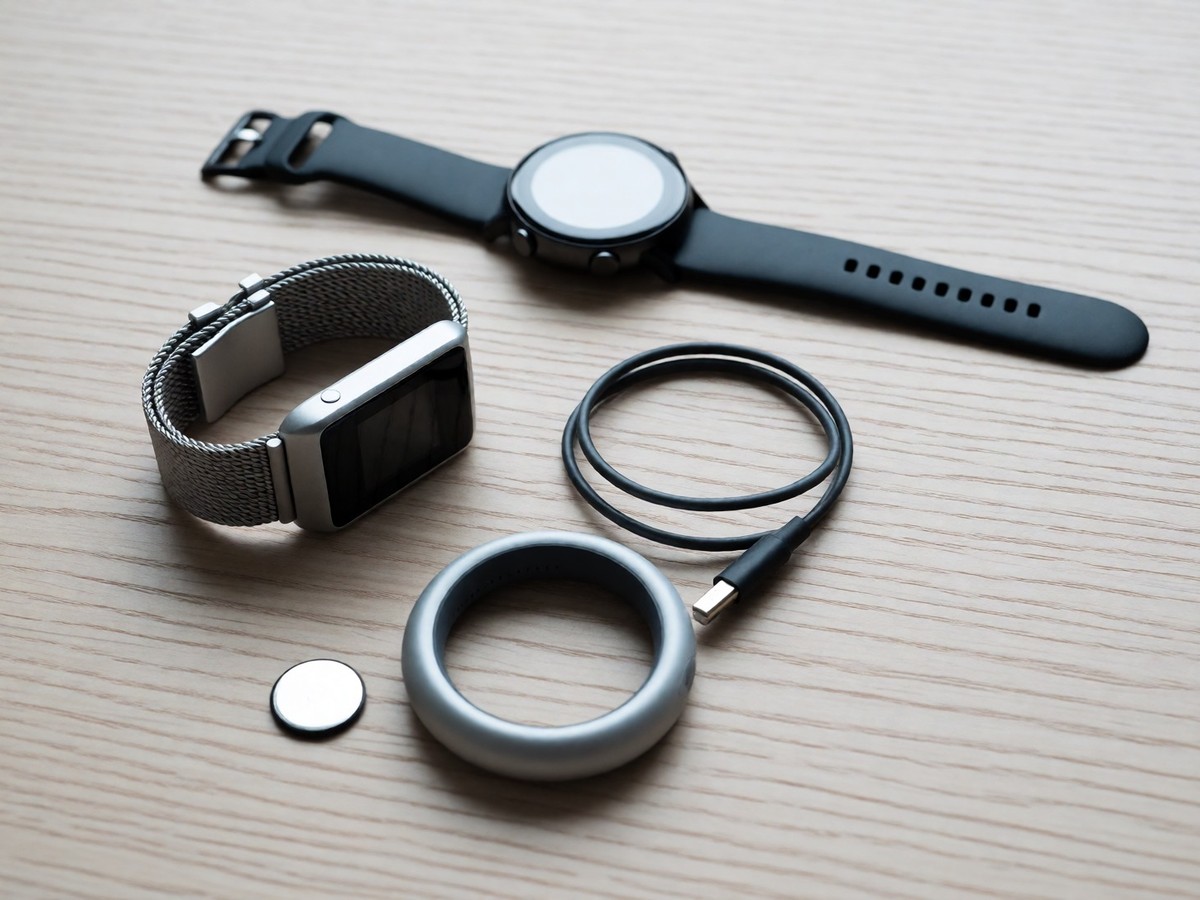
Battery capacity relates directly to physical volume, so small wearable devices struggle to power high-performance sensors. Most wearables that include more than an accelerometer require a battery that needs recharging every few days. Adding a display or additional sensors, such as a gyroscope or heart rate monitor, requires more power. Even if companies develop flexible screens or printed sensors, these components cannot currently house enough battery power to support high-accuracy biofeedback. Adding any minimal processor, memory, or wireless radio adds volume that negates the idea of invisible sensors. Processing data and transmitting it wirelessly requires substantial energy that thin, skin-like devices cannot provide. Solar panels, kinetic movement, and thermoelectric generators exist as power solutions, but they face technology limits regarding size, efficiency, and temperature differentials. Kinetic recharging using body movement is backed by Piezzo technology, but it is insufficient in terms of efficiency. Thermoelectric generators require a 10 degree Celsius difference between the device and the ambient temperature to function.
In the laptop market, the MacBook Air remains a top pick despite a price increase from $1,099 to $1,299. The MacBook Neo exists as an entry-level option for $699, though its 8 GB of RAM and slower SSD make it less effective for remote workers. For those needing a Windows alternative, the HP OmniBook 5 uses a Snapdragon processor and a 14-inch OLED screen. Consumers seeking a budget Chromebook might find the Acer Chromebook Plus Spin 514 useful at under $700. Optical sensors attempting to measure blood sugar or blood pressure without a needle or cuff do not yet meet FDA requirements for accuracy. Do researchers find a way to stabilize optical sensor readings against motion noise?

Technewsdaily
Senior tech writer covering AI, gadgets and cybersecurity. Breaking down the news that matters, every day.