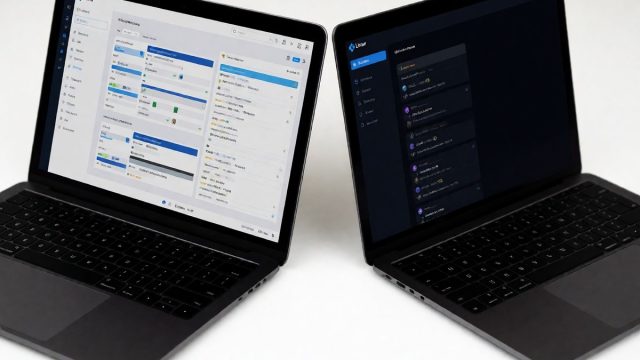
Gitea, Forgejo, and the GitLab Divide
Gitea and Forgejo consume up to 512 MB of RAM, while GitLab CE requires 16 GB, creating a distinct market split. The choice hinges on governance models, with Forgejo using democratic voting under GPLv3 and Gitea operating under MIT, alongside differences in CI/CD capabilities and infrastructure

Gitea idles at 512 MB of RAM, while GitLab Community Edition demands a baseline of 8 vCPUs and 16 GB to boot comfortably. This resource gap defines the current market split, forcing teams to choose between lightweight self-hosting and full-stack DevOps platforms. The decision is no longer just about features; it hinges on governance models, licensing terms, and infrastructure costs.
Governance and Resource Footprints
The fork of Gitea into Forgejo in late 2022 was driven by a dispute over trademark ownership. When Gitea lead maintainers moved the project to a for-profit entity called Gitea Ltd, community members created Forgejo under the Codeberg e.V. nonprofit. This structural difference impacts how decisions are made. Forgejo uses radically transparent workflows with democratic voting, whereas Gitea’s decision-making process is described as limited and less auditable. For organizations prioritizing software freedom, this distinction is decisive. Forgejo relicensed its code to GPLv3-or-later starting with version 9.0 in October 2024, ensuring that any modifications to the network service must be shared. In contrast, Gitea remains under the MIT license, which allows forks to become proprietary products without obligation.
Resource usage further separates these tools from GitLab. A single container running Forgejo or Gitea consumes roughly 100 MiB to 512 MB of RAM at idle. GitLab CE requires a minimum of 4 GB of RAM, with 8 GB recommended for a stable production environment. The startup time reflects this disparity: lightweight forges launch in seconds, while GitLab takes three to five minutes to initialize its monolithic stack including PostgreSQL, Redis, and Gitaly. Teams under 20 developers can run Gitea or Forgejo on a $5 monthly VPS without performance issues. GitLab CE typically requires a server costing $20 to $40 per month to handle background jobs and CI pipelines effectively. If your team values minimal overhead and strict open-source guarantees, Gitea or Forgejo is the clear choice. However, if you need integrated security scanning and complex pipeline orchestration, GitLab’s heavier footprint is the price of admission.
| Feature | Gitea / Forgejo | GitLab CE |
|---|---|---|
| Idle RAM | ~100-512 MB | ~4 GB |
| License | MIT (Gitea) / GPL v3+ (Forgejo) | MIT (Expat) |
| Governance | Commercial / Non-profit | Publicly traded company |
| Startup Time | Seconds | 3-5 Minutes |
CI/CD Capabilities and Migration Paths
Both Gitea and Forgejo support GitHub Actions-compatible workflows, allowing users to migrate existing YAML files with minor adjustments. Forgejo reads from .forgejo/workflows directories but falls back to .github/workflows, maintaining compatibility with the broader ecosystem. Gitea describes its Actions as "mostly compatible," relying on a forked runner system. These lightweight solutions lack the advanced orchestration features found in GitLab, such as DAG pipelines, parent-child pipelines, and multi-project triggers. GitLab’s native CI/CD engine is deeply integrated with its container registry and deployment environments, offering capabilities that standalone runners cannot match.
Migration between Gitea and Forgejo is straightforward because they share 99% of their codebase. Forgejo took over as a hard fork in early 2024, but it still accepts Gitea installations as version upgrades rather than data exports. The binary even retains the name gitea for service file compatibility. Moving from GitLab to either lightweight forge is more complex, requiring manual reconfiguration of users and CI settings. One significant trend involves government entities choosing these platforms for data sovereignty. The Dutch government launched code.overheid.nl, a self-hosted Forgejo instance designed to keep source code out of US-controlled infrastructure. Gentoo Linux also established an official presence on Codeberg in February 2026, citing concerns over mandatory AI integration on other platforms. These moves highlight a shift toward controlling where code lives and who governs it. Whether smaller enterprises will follow suit depends on their specific compliance needs and budget constraints.

Technewsdaily
Senior tech writer covering AI, gadgets and cybersecurity. Breaking down the news that matters, every day.