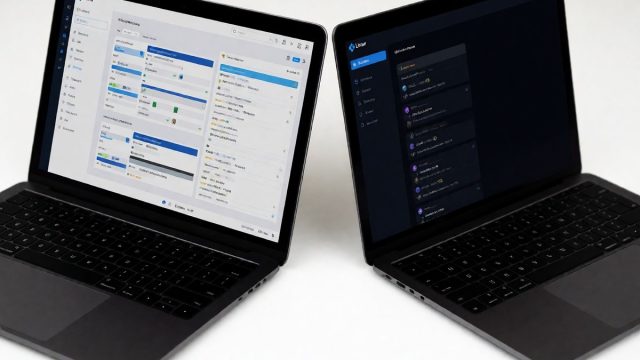
The future of n8n versus Zapier in AI agent orchestration
n8n and Zapier both serve as hubs for AI agent orchestration but differ in architecture. n8n offers self-hosting and source code access for security, while Zapier provides a managed, low-code environment with over 9,000 integrations for rapid deployment.


The Berlin-based platform n8n reached a $5.2 billion valuation after SAP made a strategic investment, while the San Francisco-based competitor Zapier maintains a $5 billion valuation from its 2021 secondary market transaction. Both tools now position themselves as central hubs for connecting large language models to enterprise applications, yet they approach the architecture of AI agents with fundamentally different constraints. I see this divergence clearly: n8n prioritizes source code visibility and self-hosting control, whereas Zapier focuses on a managed, low-code environment that abstracts infrastructure details away from the end user.
Control versus convenience
n8n operates under a "fair-code" license, which allows users to access the source code on GitHub and deploy the platform on-premises or via Docker. This setup lets organizations keep data within their own environment, a critical requirement for teams handling sensitive information. The platform supports over 1,500 integrations and 9,000 workflow templates, enabling developers to build multi-step agents using JavaScript or Python when visual nodes fall short. Users can connect to OpenAI, Anthropic, Google, or open-source models without changing their underlying architecture, ensuring no vendor lock-in. I value this flexibility because it allows for precise debugging; you can open any step in the workflow, see exactly what it does, and explain the logic to anyone who runs it. The community is active, with 200,000 members sharing solutions, and the company raised $180 million in a Series C round led by Accel, bringing total funding to about $240 million. However, the learning curve is steeper than Zapier’s, and setting up a self-hosted instance requires technical expertise in Node.js and TypeScript.
Zapier takes a different path by offering a cloud-only solution that connects to more than 9,000 web applications through over 66,000 triggers and actions. Their recent shift toward AI orchestration includes an official integration for the Model Context Protocol, allowing external LLMs like Claude and ChatGPT to execute actions across the Zapier catalog using natural language commands. A "Next Gen Zap" includes an AI manager agent that detects issues and fixes them automatically, turning repeat AI work into deterministic steps that use fewer tokens. For teams that want to start building in their favorite AI tool and then run trusted workflows on Zapier, this model removes the need for passwords or API keys. The platform maintains SOC 2 Type II, SOC 3, GDPR, and CCPA compliance, providing granular permissions for every team member. I find the lack of self-hosting options limiting for enterprises with strict data residency laws, but the ease of use is undeniable. You can spin up automations in hours rather than engineering sprints, and the AI Copilot builds draft Zaps from plain English prompts.
| Feature | n8n | Zapier |
|---|---|---|
| Deployment | Self-hosted (Docker) or Cloud | Cloud only |
| Integrations | 1,500+ apps | 9,000+ apps |
| License | Fair-code (Source-available) | Proprietary |
| Valuation | $5.2 billion | $5 billion |
| Code Access | Full source code | No source access |
The choice between these two platforms hinges on whether your team values transparency or speed. If you need to audit every line of code executing your AI agents, n8n is the clear winner. Its ability to run AI with no external data transfer using a self-hosted stack with Ollama, Quadrant, and PostgreSQL sets it apart for security-conscious organizations. Conversely, if your priority is rapid deployment without managing servers, Zapier’s governed environment offers a safer, albeit less transparent, path. I would skip the bonus buy of complex custom coding in Zapier entirely, as the platform restricts deep customization compared to n8n’s extensible node system. Does the trade-off between full code ownership and zero-maintenance hosting justify the higher initial effort required by n8n? That question remains open for many IT leaders.

Technewsdaily
Senior tech writer covering AI, gadgets and cybersecurity. Breaking down the news that matters, every day.