Biggest risks in Hetzner Cloud data center expansion
Hetzner Cloud's six data centers create single points of failure, as shown by the NBG1 outage and CVE-2026-97631 vulnerability. While offering 8 vCPU instances for $32.70, the platform lacks managed services and global redundancy, forcing users to handle complex infrastructure tasks.

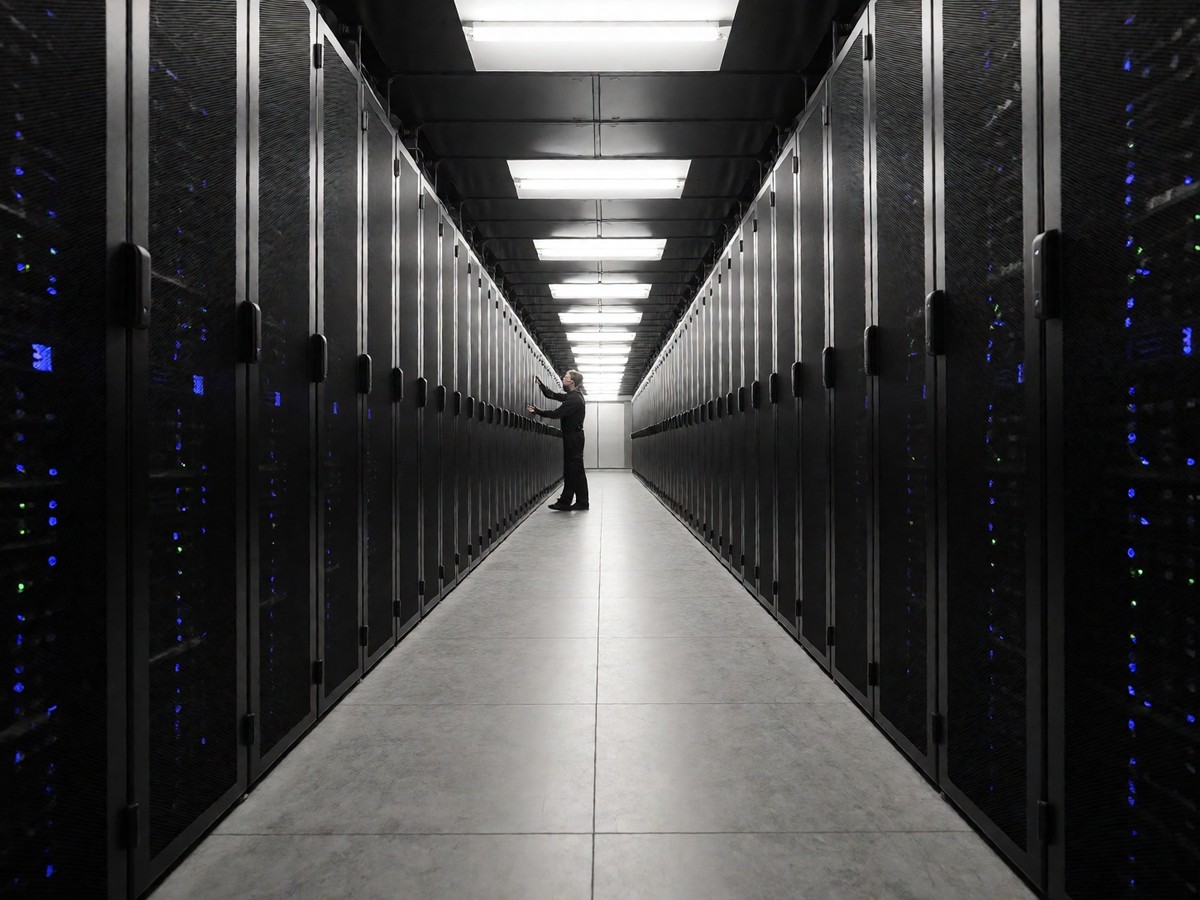
Hetzner operates six data centers across three continents, a footprint that is 90% smaller than Microsoft Azure’s sixty facilities. This geographic concentration creates immediate single points of failure for users relying on the platform. A recent network disruption at the NBG1 location in Nuremberg took down cloud servers and load balancers, leaving affected networks unavailable for several hours while engineers investigated the cause. The company also reported a critical security vulnerability in the EDK II UEFI firmware component, labeled CVE-2026-97631, which required an urgent update to maintain system integrity. These incidents demonstrate that the infrastructure lacks the redundant depth of hyperscale competitors. Users who choose Hetzner for its low costs must accept that a regional fault can halt operations entirely, with no automatic failover to distant regions.
Infrastructure limits and hardware trade-offs
The cost advantage of Hetzner comes from a simpler technical stack that does not match the managed complexity of AWS or Azure. While Hetzner charges $32.70 per month for an eight-vCPU instance, equivalent AWS instances cost $226.59 on-demand, a difference of nearly seven times. However, this price gap ignores the operational burden placed on the user. Hetzner does not provide object storage, forcing developers to manage external buckets or use less efficient block storage alternatives. The lack of native managed services means teams must install and maintain their own databases, message queues, and monitoring tools. For small organizations, this approach saves money but requires specialized engineering skills that many startups do not possess. The provider’s dedicated server line, such as the AX102, uses enterprise-grade NVMe drives with power loss protection to ensure data durability, yet the cloud virtual machines still face I/O wait issues under heavy load if misconfigured.
| Provider | Monthly Cost (8 vCPU/16GB) | Data Centers | Object Storage |
|---|---|---|---|
| Hetzner | $32.70 | 6 | No |
| AWS EC2 | $226.59 | 60+ | Yes |
| Azure VM | $331.42 | 60+ | Yes |
Compliance adds another layer of risk for European businesses. GDPR fines can reach up to €20 million or 4% of global annual revenue, whichever is higher, making data residency a non-negotiable requirement. Hetzner’s focus on German and Finnish locations helps satisfy these rules, but it limits options for customers needing multi-region redundancy outside the EU. The company expanded its Helsinki campus to include ten data centers, allowing tens of thousands of servers to operate in a single geographic zone. This density improves efficiency but concentrates physical risk. If a subsea cable link fails or a local power grid collapses, the entire Finnish cluster goes offline. You already know the basics of cloud architecture, so you understand that true high availability requires geographic dispersion that Hetzner simply cannot offer at its current scale.
Operational stability and market pressure
Recent status reports show frequent minor issues, including console outages and API latency spikes across regions like Singapore and Tokyo. In one incident, the Hetzner Console became unavailable for over an hour, preventing users from managing their resources during a critical window. These interruptions are brief compared to major outages, but they erode trust for businesses that rely on automated provisioning. The competitive landscape is shifting rapidly as AI workloads drive global cloud spending to $129 billion in the first quarter of 2026, a 35% year-over-year increase. Hyperscalers are investing billions in new campuses, with Microsoft committing $80 billion to AI data centers and Amazon expanding in Georgia and Pennsylvania. Hetzner remains a niche player in this arms race, lacking the capital to build comparable global capacity.
The decision to stay with Hetzner often depends on whether the savings outweigh the operational overhead. Companies like Ahrefs saved approximately $400 million by avoiding cloud providers, proving that self-hosting works for specific workloads. Yet, that success required a team capable of managing complex infrastructure without vendor support. For most organizations, the threshold for switching to AWS or Azure is not just user scale but the need for managed services that handle the "unhappy path" of system failures. Hetzner provides raw compute power at a fraction of the cost, but it places the full weight of reliability engineering on the customer. Can a small team truly absorb the risk of a total regional outage when the alternative is paying ten times more for guaranteed uptime?

Technewsdaily
Senior tech writer covering AI, gadgets and cybersecurity. Breaking down the news that matters, every day.