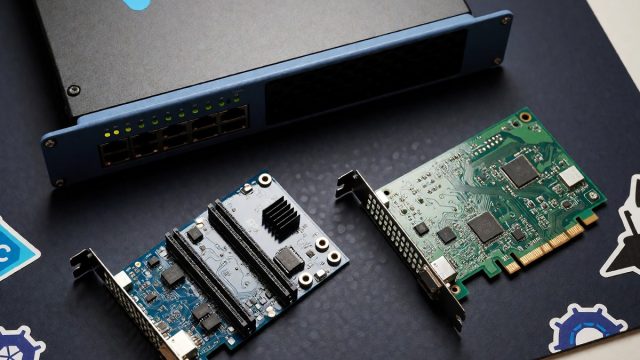
n8n automation surge in October 2026
n8n provides a cost-effective alternative to Zapier and Make by charging per execution rather than per task or operation. A technical team running 100,000 monthly runs can reduce costs to roughly $20 using a self-hosted n8n instance on a DigitalOcean droplet.


The logic of modern automation
n8n was founded in 2019 by Jan Oberhauser in Berlin. It works as a workflow automation and AI orchestration layer. Zapier lists 7,000+ integrations. Make lists 1,500+ integrations. n8n contains over 400 native integrations. n8n’s HTTP Request node connects to any API. This capability allows users to bridge gaps when a specific integration does not exist. Many teams use n8n to automate lead routing, support triage, content systems, education flows, and document approvals. n8n contains 9,000+ workflow templates. You should ignore the shiny logos and focus on the math. n8n works for teams that want more ownership and custom logic. n8n allows users to mix visual nodes with JavaScript or Python. This flexibility helps teams move from quick tests to custom business logic. Workflow tools are becoming company memory systems. Instead of hiring more people to patch broken handoffs, teams encode recurring work into systems first. This keeps humans focused on judgment, sales, and exceptions. n8n covers three layers of work. First, it handles classic workflow automation like data syncing and CRM updates. Second, it handles orchestration of data across business tools. Third, it handles orchestration of language models and agent-like flows inside business processes.
Cost and AI performance comparison
The billing models for these tools differ significantly. Zapier charges per task. Every action step in a workflow counts as a task. Make charges per operation. Every module that fires costs one credit. n8n charges per execution. A single workflow run costs the same whether it contains two nodes or thirty. A technical team running 100,000 monthly runs might pay over $1,000 on Zapier, while the same workload costs roughly $20 on a self-hosted n8n instance running on a $12 DigitalOcean droplet because n8n charges per execution instead of per task. Zapier’s per-task model punishes multi-step workflows. A five-action Zap costs five times as much as a one-action Zap. Make’s per-operation billing becomes expensive for long scenarios with iterators where a single run over 100 items can burn 600 operations. n8n’s per-execution model avoids these complexity penalties.
| Metric | n8n Cloud | n8n Self-hosted | Make | Zapier |
|---|---|---|---|---|
| 10,000 runs | ~$60/mo | ~$10-20/mo VPS | ~$35-60/mo | ~$400-600/mo |
| 100,000 runs | ~$500+/mo | ~$20-40/mo VPS | ~$300-450/mo | ~$1,000-3,000/mo |
n8n wins for AI-heavy workflows. It includes LangChain-based AI Agent nodes and vector stores like Qdrant and Pinecone. Users connect to local LLMs via Ollama. Zapier uses MCP to expose its 8,000-app catalog to external agents like Claude. Make lacks native RAG pipeline support or vector database integration. n8n contains the ability to build RAG pipelines including ingestion, chunking, embedding, retrieval, and reranking. n8n’s AI Agent node supports multi-step reasoning and tool usage. Zapier is the best choice for non-technical teams who need speed over control. Make remains a strong value pick for users who prefer visual branching and an intuitive scenario canvas.
Deployment and licensing decisions
Self-hosting n8n requires a server or a Docker container. A production setup includes a PostgreSQL database and a reverse proxy like Caddy or Traefik. Users must set a strong N8N_ENCRYPTION_KEY to protect credentials. n8n’s interface is functional but clunky compared to Zapier’s polish. n8n is source-available under a fair-code license. The Sustainable Use License permits internal business use. Consultants can build and maintain workflows for clients if the clients do not edit or build them. n8n is the better option for regulated environments where data stays in a VPC. n8n’s Community Edition is free to self-host. n8n cloud plans start at $20 per month.
Running n8n at scale requires more than a basic laptop. A production instance needs at least 1 to 2GB of RAM for light use, but processing large JSON payloads or images requires more. PostgreSQL is the recommended database for handling concurrent executions. Users can deploy n8n on a Raspberry Pi 4 with 4GB of RAM or a mid-range desktop with 16GB of RAM. For high-throughput setups, teams deploy a separate worker using Redis to handle the workload. n8n includes error handling through dedicated error workflows and per-node retry with backoff. Make includes granular error handling via per-module options like ignore, resume, rollback, and break. Zapier includes autoreplay on paid plans. How will n8n’s licensing changes affect small agencies next year? n8n wins for developers, complex workflows, and cost control.

Technewsdaily
Senior tech writer covering AI, gadgets and cybersecurity. Breaking down the news that matters, every day.