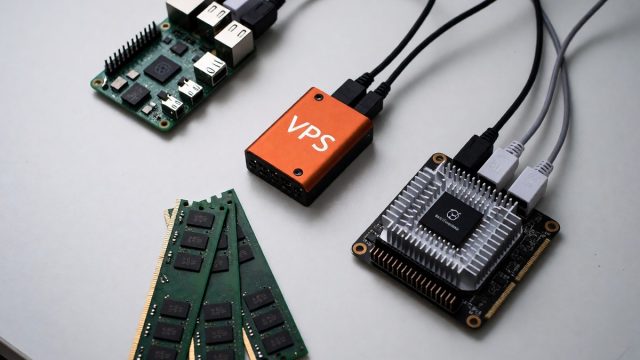
Economics of Pterodactyl 1.11 adoption for game server hosts
Pterodactyl 1.11 adoption forces hosts to choose between Docker and containerd for container management. Switching to containerd for deployments with over 50 servers per node increases profit margins by reducing memory overhead and improving security.

Runtime security and the Pterodactyl choice
Pterodactyl 1.11 adoption forces hosts to evaluate whether they use Docker or containerd for their container runtime. Docker provides a convenience layer with its CLI and volume management, but it adds an extra API layer and process. I find that for deployments with more than 50 servers per node, the memory savings from bypassing the Docker daemon translate directly into higher profit margins because you can fit more instances on the same hardware. containerd has only 2 million lines of code compared to the 15 million lines in the Docker daemon. This smaller codebase resulted in 3 CVEs for containerd compared to 12 for Docker during the 2024-2025 period. I see a significant security risk in the Docker socket because it grants root-equivalent access in multi-tenant environments. Docker daemon crashes affect all containers on the host. Pterodactyl uses the Wings daemon to manage containers, which provides flexibility through eggs. Multicraft focuses on Minecraft, making it a simpler choice for private servers, but it lacks the multi-game support found in Pterodactyl or AMP. I find that Multicraft provides a familiar experience for admins who follow standard Minecraft guides, but it cannot compete with the isolation provided by Pterodactyl’s container approach. Pterodactyl users can manage a network with BungeeCord or Velocity using the same interface. Catalyst is the first panel that uses containerd directly via gRPC communication. I find that for production scaling, containerd is the better choice.
Resource management and scaling costs
Scaling a game server network requires strict control over CPU and RAM allocation. Pterodactyl uses eggs to define startup variables such as the Java version, the Jar name, memory, and startup parameters. I note that hosts can use the –cpus flag in Docker to set hard limits on the number of CPU cores. Many hosts also use –cpu-shares to manage relative CPU weight. Pricing models generally fall into two groups: slot-based and resource-based. Slot-based pricing counts the maximum number of players, while resource-based pricing uses RAM, CPU, and storage. I find slot-based pricing problematic for modded environments because ten players on a heavily modded world can require more RAM than thirty players on a vanilla server.
| Feature | Multicraft | Pterodactyl | AMP |
|---|---|---|---|
| Primary Focus | Minecraft | Multi-game | Multi-game |
| Isolation | Host-dependent | Container | Modular |
| Reselling | No | No | Yes |
| Setup | Easy | Moderate | Easy |
I see developers using Pterodactyl eggs to manage variables like the Message of the Day or custom subdomains. For specialized setups, a host can configure different eggs for Paper and Purpur. I find that Pterodactyl allows for finer subuser permissions than Multicraft. I see hosts using Pterodactyl to manage diverse game loads including Palworld and Valheim. If a host runs a single private SMP, Multicraft is enough. I find that Pterodactyl’s ability to use variables in the startup command helps manage complex modpacks. Pterodactyl includes the console and the file manager for live start output and file access. Users can edit JVM flags in the startup area. Pterodactyl handles backups and scheduled tasks to reduce admin work.
The economics of AMP reselling
AMP provides a modular framework for self-hosted panels on Windows and Linux. The Professional and Enterprise editions provide specific benefits for commercial users. The Enterprise Edition allows hosts to sell servers with AMP preinstalled or offer it as a management interface for managed game server customers. This edition also includes white boxing to preserve a brand identity. AMP includes a simple setup process and all system dependencies for a quick installation. I find the AMP scheduler useful because it responds to in-game events like players joining or leaving. This functionality is not present in other panels. I see users moving servers between nodes easily because AMP licenses are not hardware or IP locked. I note that AMP provides a syntax-highlighting file editor and an integrated SFTP server for bulk uploads of game data. For users who want to manage their community, the in-game analytics in the Advanced and Enterprise editions track how long users play and where they are from. I find that the API makes it easy to integrate with third-party applications. AMP supports dozens of games including Hytale and Rust. You can pick which game or application you want to set up and AMP takes care of the rest. AMP can automatically install and update content from Modrinth and CurseForge. I see that the Professional edition includes webhooks to integrate with other tools. Does the transition to containerd negate the convenience of the Docker CLI for small-scale hosts?

Technewsdaily
Senior tech writer covering AI, gadgets and cybersecurity. Breaking down the news that matters, every day.