Transitioning to local LLM inference for cost-controlled development
Switching to local hardware like an 8x B300 system can save $4,746,771.5 over five years compared to AWS instances. Ollama facilitates this transition for millions of developers by providing a platform for private, cost-effective local model inference.

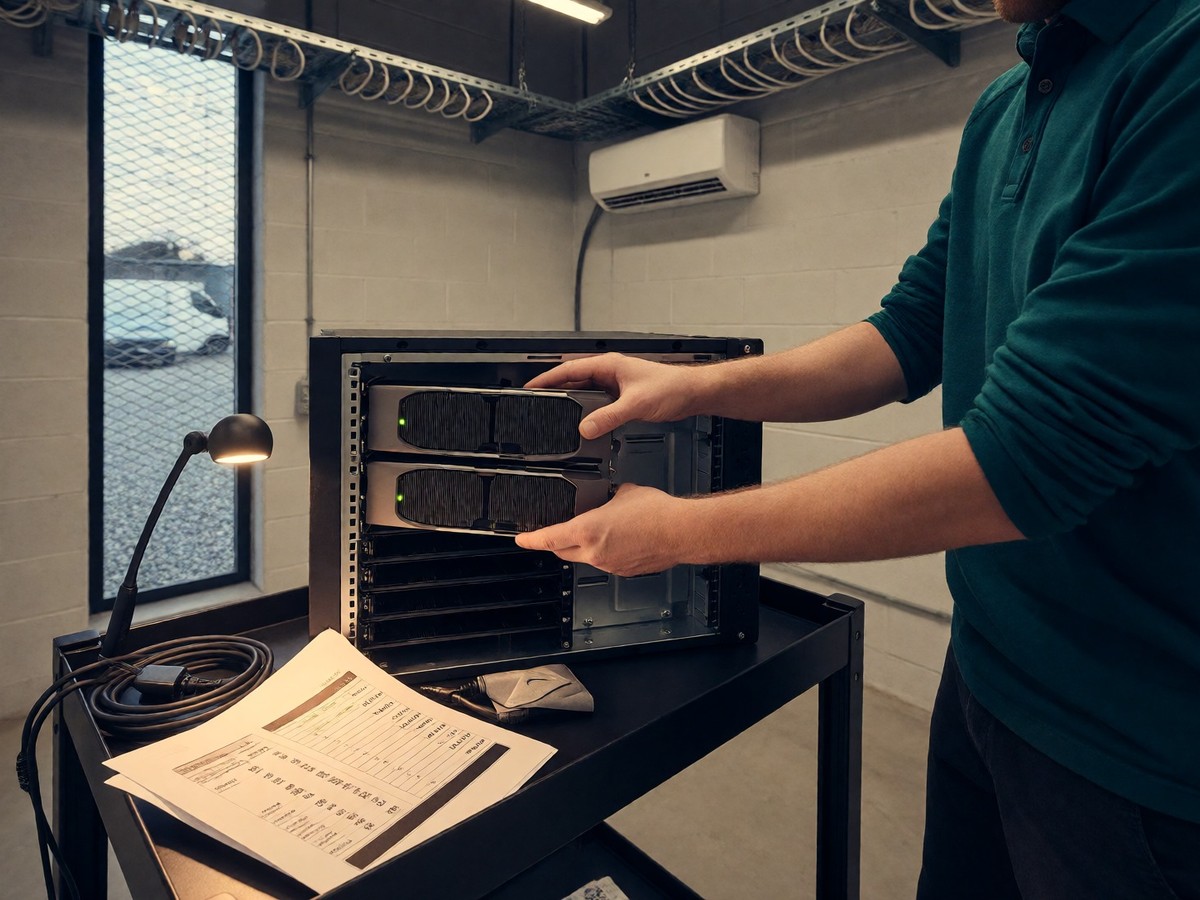
An 8x B300 system saves $4,746,771.5 over a 5-year lifecycle compared to renting an AWS p6-b300.48xlarge. This 76% saving equals millions in avoided costs. A Lenovo Config B with 8x H200 reaches a breakeven point against Azure ND96isr H200 v5 on-demand pricing in 5.2 months. Even against a 1-year reserved instance, the Lenovo hardware pays for itself in 8.5 months. Ollama, an open source platform used by 8.9 million developers every month, facilitates this move toward local inference. The platform reaches 85% of the Fortune 500 and has amassed 176,000 stars on GitHub. Current pricing for flagship models remains high, with GPT-5.6 Sol charging $5 for input and $30 for output per million tokens.
| Model | Input Rate (per 1M) | Output Rate (per 1M) |
|---|---|---|
| GPT-5.6 Luna | $0.20 | $1.20 |
| Claude Sonnet 5 | $2.00 | $10.00 |
| Claude Opus 5 | $5.00 | $25.00 |
| Gemini 3.1 Pro | $2.00 | (not specified) |
Hardware capacity and privacy
Large models require significant memory. A system needs at least 8 GB of RAM, though 32 GB or more is required for the largest models. A developer who provisions an instance with a single NVIDIA A100 for running codellama:34b models might spend $3.67 per hour, but running these models locally eliminates those recurring hourly fees entirely. For those using multiple GPUs, Ollama uses pipeline parallelism to split model layers across cards. This method increases the capacity to load larger models, such as Llama 3.3 70B, but it does not increase the speed for a single request. You should check your VRAM before buying a second GPU. Running a model with 70B parameters requires roughly 42 GB of weights, and an 8K context limit adds further memory requirements. Local models provide better privacy because they run on machines under a user’s direct control, which prevents prompt leaking.
Integration with developer tools
Teams using Claude Code face challenges because the tool expects Anthropic’s /v1/messages format, while Ollama uses an OpenAI-compatible endpoint. Ollama uses /v1/chat/completions for its local API calls. LiteLLM acts as the bridge for these specific communication requirements. Users can deploy LiteLLM in a Docker container to handle task-based routing across multiple models. This setup allows a team to map a Claude 3.5 Haiku request to a local Qwen 2.5 Coder 7B model. LiteLLM provides master key authentication with JWT support and fine-grained permissions. These tools enable teams to manage rate limiting and audit logging for their local workloads. Will companies eventually abandon cloud-based reasoning models entirely to save on inference costs?

Technewsdaily
Senior tech writer covering AI, gadgets and cybersecurity. Breaking down the news that matters, every day.