Valkey dominates the in-memory cache market following Redis license change
Valkey has emerged as the leading open-source alternative to Redis following licensing shifts, offering up to 270 percent throughput gains on AWS. Industry leaders like Google Cloud and AWS support the Linux Foundation project to provide vendor-neutral, high-performance in-memory data storage.

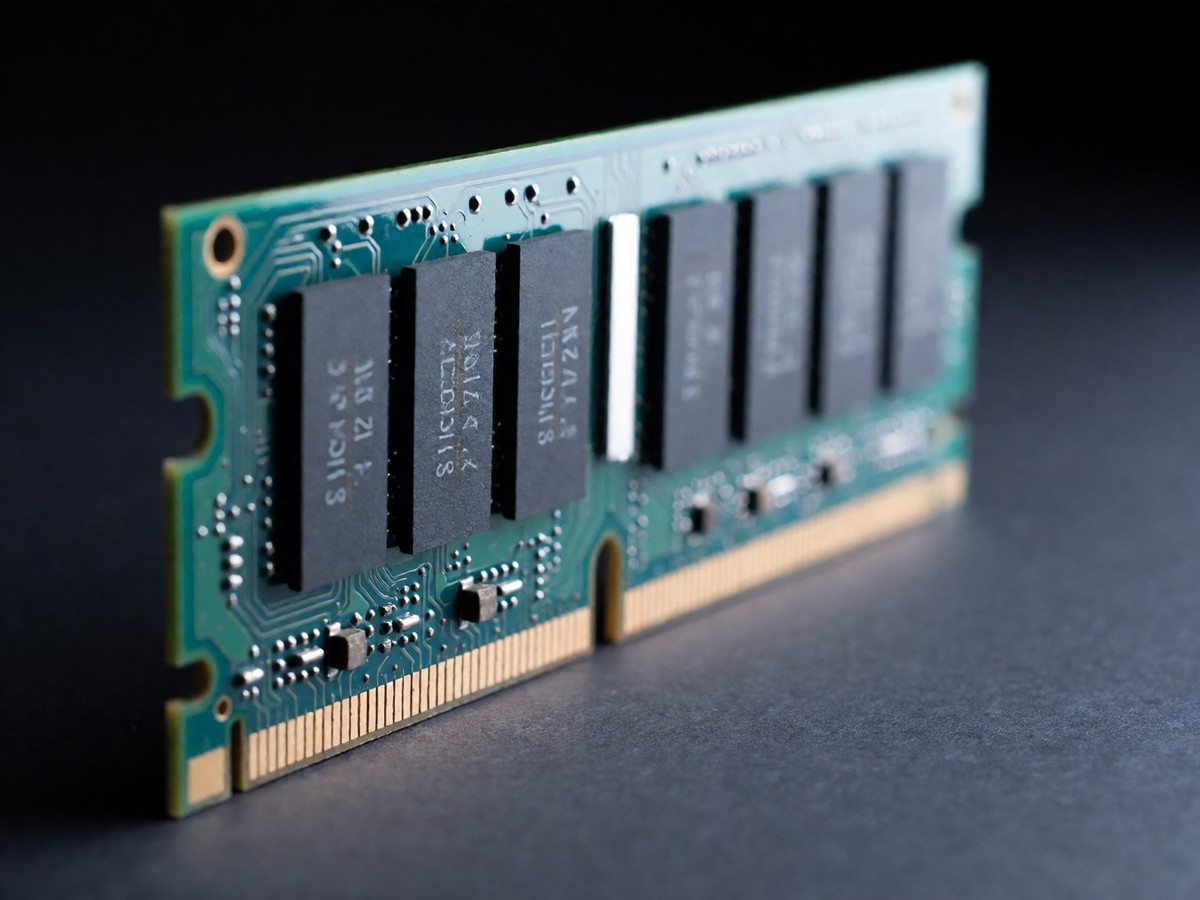
The community abandoned Redis for Valkey
The decision by Redis Inc. to replace the permissive BSD license with the SSPL and RSAL on March 20, 2024, triggered an immediate migration of maintainers to Valkey. This fork, hosted by the Linux Foundation, uses the Redis 7.2.4 codebase and remains under the BSD 3-clause license. AWS, Google Cloud, Oracle, Ericsson, and Snap lead the industry coalition supporting this project. While Redis 8.0 introduced the AGPLv3 as a third option in May 2025, many legal teams view the copyleft provisions of AGPL as too restrictive for commercial service providers. I find that the industry move toward Valkey makes sense for any team prioritizing vendor neutrality. Most major Linux distributions, including Ubuntu 26.04 LTS and Debian 13, ship Valkey by default instead of Redis. The original Redis private channel included five maintainers, including Madelyn Olson and Zhao Zhao from Alibaba, who moved to Valkey immediately when the license change was announced. The sudden consolidation of engineering talent meant the project was operational almost instantly. This cohesion allowed the fork to gather support much faster than previous alternatives like KeyDB. This momentum grew after David Nalley from AWS met with Linux Foundation executive director Jim Zemlin during the KubeCon conference in Paris. This shift follows a long history of licensing disputes, starting when Salvatore Sanfilippo launched Redis in 2009 under the BSD license to allow for competing branches. After Garantia rebranded to RedisDB in 2013 and eventually Redis Labs, the community pushed back against changing how Redis Modules were licensed. This history of tension provided the groundwork for the sudden movement of developers toward Valkey when Redis Inc. announced its license change.
Technical gains and lower cloud bills
Valkey provides superior performance for high-concurrency workloads due to its multi-threaded I/O multiplexing and asynchronous network socket parsing. In my experience, the architectural shift in Valkey 8.0, which offloads client command parsing to worker threads, solves the single-threaded bottleneck found in older Redis versions. This design uses thread-local storage to reduce atomic contention in updating memory metrics. AWS reports that this design yields throughput gains of up to 270 percent and latency improvements of up to 70 percent. The May 2026 release of Valkey 9.1 reached 2.1 million requests per second while reducing memory usage by 10 percent, proving that the community can outpace the original developers through rapid, collaborative innovation. I recommend Valkey for any production workload where cost and scale matter. On Amazon ElastiCache, Valkey nodes are about 20 percent cheaper than equivalent Redis nodes. Because this price gap exists due to more efficient memory structures and lower storage rates, a steady 5 GB cache with a replica costs $184.54 on Valkey while the Redis OSS equivalent costs $312.64.
| Feature | Valkey 9.x | Redis 8.x |
|---|---|---|
| License | BSD-3-Clause | RSALv2 / SSPLv1 / AGPLv3 |
| 1GB Storage Cost (AWS) | $61.32 | $91.25 |
| 1,000 Req/s Cost (AWS) | $6.04 | $8.94 |
| Vector Search | Valkey-search module | Built-in |
| Multi-threading | Native I/O threading | Single-threaded core |
For users on ElastiCache Serverless, the costs follow a different pattern. Storing 1 GB of data costs $61.32 per month on Valkey, whereas Redis OSS costs $91.25 for the same amount. Serving 1,000 requests per second costs $6.04 on Valkey compared to $8.94 for Redis OSS, but if your workload has high traffic, such as 20,000 requests per second, the storage cost becomes a smaller portion of the total bill. While Redis 8.0 includes native vector sets, the release of Valkey 9.0 on ElastiCache has brought full-text and vector search into the managed Valkey environment.
Migration strategies and compatibility
Migrating to Valkey involves a simple engine swap because it remains wire-compatible with Redis 7.2.4. Existing Jedis, Lettuce, go-redis, or node-redis clients work without any modification to application code. The connection string remains the same, using the redis:// protocol. If you use a cache for ephemeral data, you simply point the application at the new Valkey endpoint and let the cache rebuild. For persistent data, you can use the RDB snapshot method if your source is Redis 7.2 or earlier. I would tell you to be careful if you use Redis 7.4 or later, as Valkey cannot load RDB files from those versions. In those cases, you must use the replication path with the REPLICAOF command to sync data.
If you rely on proprietary modules like RedisJSON or RediSearch, you must find alternative solutions because Valkey includes modules like valkey-json and valkey-search that are not identical to the core Redis implementations. Most teams find that dedicated, purpose-built tools for search or time-series data perform better than monolithic modules anyway. On AWS, you can even perform an in-place engine swap to move a Redis OSS cluster to Valkey without changing the endpoint. You can also use a blue/green upgrade to spin up a parallel Valkey cluster, sync the data, and cut traffic over once it is healthy. If your current setup relies on Redis 7.4 features, how will you manage the transition to a compatible data format?

Technewsdaily
Senior tech writer covering AI, gadgets and cybersecurity. Breaking down the news that matters, every day.