The technical direction of n8n automation workflows
Automation workflows evolve through three complexity layers ranging from rule-based tasks to autonomous AI agents. Companies balance scaling needs by choosing between n8n Cloud plans, such as the €20 Starter tier, or self-hosting on a VPS for total infrastructure control.

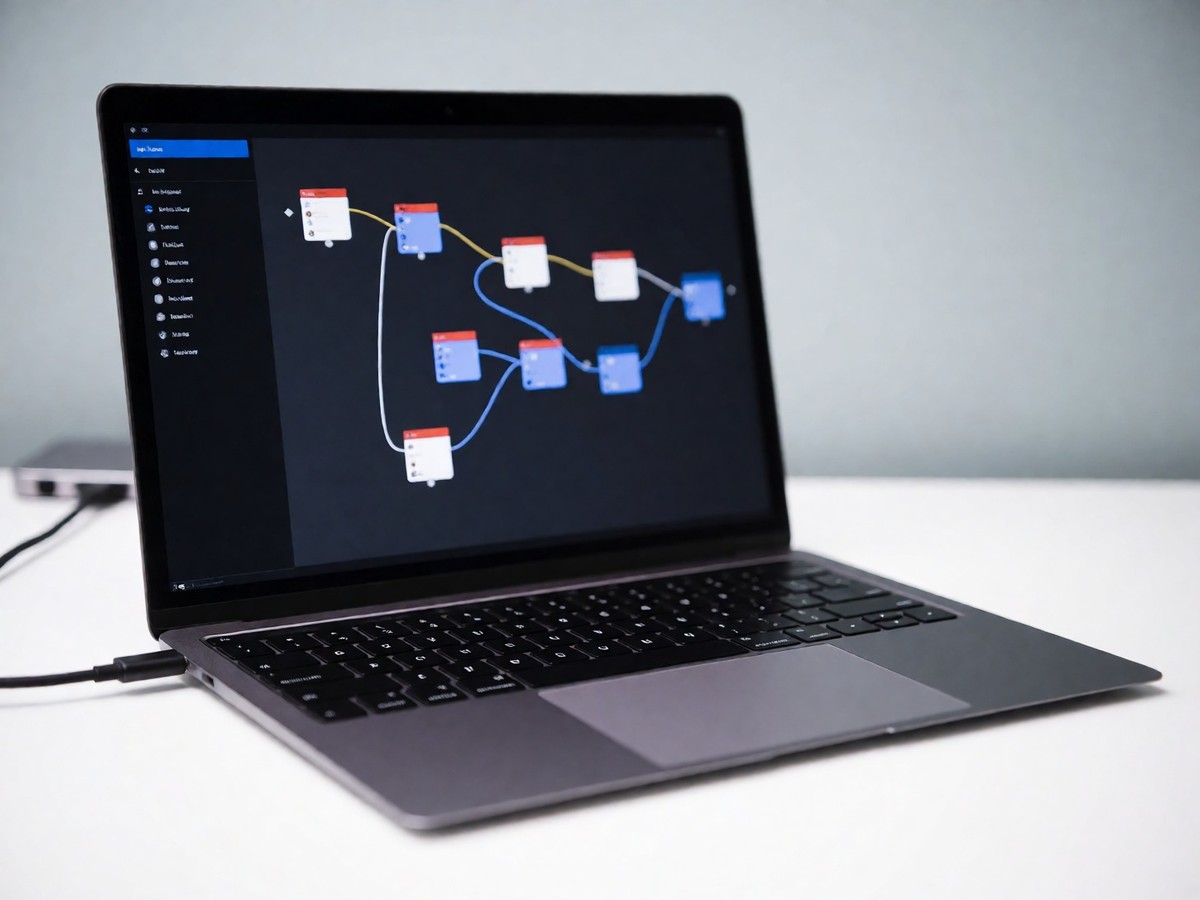
AI integration and the hierarchy of automation
Automating rule-based tasks reduces labor costs by 20 to 40 percent. These deterministic workflows move data from an input to an output without changing the process. Users often attempt to build autonomous AI agents before they master these basic data structures. These agents use memory and tools to plan their own paths. Because these agents are non-deterministic, they are often harder to control than standard workflows. You should build a solid foundation of standard workflows before attempting to deploy AI agents.
Modern workflows involve three distinct layers of complexity. Layer 1 consists of deterministic, rule-based tasks. Layer 2 includes AI-assisted workflows where a model analyzes data to make decisions. Layer 3 covers autonomous agents that use tools to execute tasks. The AI Agent node allows users to connect models like OpenAI, Claude, or Gemini to business systems. This node sends workflow data to the model provider. Technical teams use these connections to create systems that interpret data and trigger follow-up workflows.
The AI integration era relies on the ability to connect any model to any business system. A developer can connect Telegram, Google Drive, and a Claude agent into a single pipeline. This capability allows for advanced tasks such as analyzing support tickets or generating multi-modal content. However, the documentation and support can be thin on some integrations.
Deployment models and execution costs
Companies choose between n8n Cloud and self-hosting on a VPS. Cloud plans provide managed updates and zero infrastructure work. The Starter plan costs €20 per month and allows 2,500 executions. The Pro plan allows 10,000 executions for €50 per month, while the Business tier costs €667 per month and provides 40,000 executions along with SSO and Git version control features for larger teams. This difference in price exists because the Business tier includes advanced management capabilities. A single workflow that checks a condition every five minutes uses 8,640 executions monthly, a figure that exceeds the 2,500 limit provided by the Starter cloud plan. This makes the choice between managed cloud and self-hosting a matter of scaling needs. Users must decide if they prefer zero maintenance or total control over their infrastructure.
| Plan | Monthly Cost (Annual) | Execution Limit |
|---|---|---|
| Starter | €20 | 2,500 |
| Pro | €50 | 10,000 |
| Business | €667 | 40,000 |
| Community | $0 | Unlimited |
Self-hosting the Community Edition carries no license fee but requires users to manage their own server and updates. n8n consumes 1,000 units where Zapier consumes 9,000 for the same automation. This makes n8n more cost-effective for complex workflows. Sub-workflows do not count separately against monthly execution limits. NameHero provides AI Agent Hosting on a VPS starting at $6.49 per month. This plan includes 2 vCPU, 4 GB RAM, and 100 GB NVMe storage. This hosting is a better choice for long-running AI agents because serverless platforms often impose execution limits and request timeouts. A workflow that processes a large JSON payload on a 1 GB machine can exhaust system memory and cause the container to restart mid-run, which remains a common failure for new users. Will companies eventually abandon self-hosting for easier managed services?
Security management in production environments
Security teams monitor n8n because the platform becomes a privileged control plane for machine-to-machine access. Self-hosting shifts trust boundaries inward, so administrators manage patching and encryption. In March 2026, CISA added CVE-2025-68613 to its Known Exploited Vulnerabilities catalog. Self-hosters must apply these security patches themselves to prevent exploitation.
n8n Cloud runs on Microsoft Azure in the European Union. n8n upgrades every instance at least every two weeks to ensure security fixes reach all users. Self-hosting shifts the responsibility for data deletion and TLS to the user. A self-hosted instance requires the user to manage its own database and backups.
Community nodes present a risk because they consist of unverified code from public sources. These nodes have full access to the machine where n8n runs. Any user with access to a credential can use it to build a workflow that sends data elsewhere. Managing credentials and secrets requires strict governance in any production environment. Community nodes are unverified npm packages that have full access to the machine where n8n runs.

Technewsdaily
Senior tech writer covering AI, gadgets and cybersecurity. Breaking down the news that matters, every day.