Windmill performance leads benchmarks for durable execution
Windmill outperforms Airflow by 13x in benchmarks for long-running tasks across multiple languages. The analysis compares Windmill's execution speed and isolation models against Temporal's managed Cloud service and Cadence's self-hosted infrastructure.

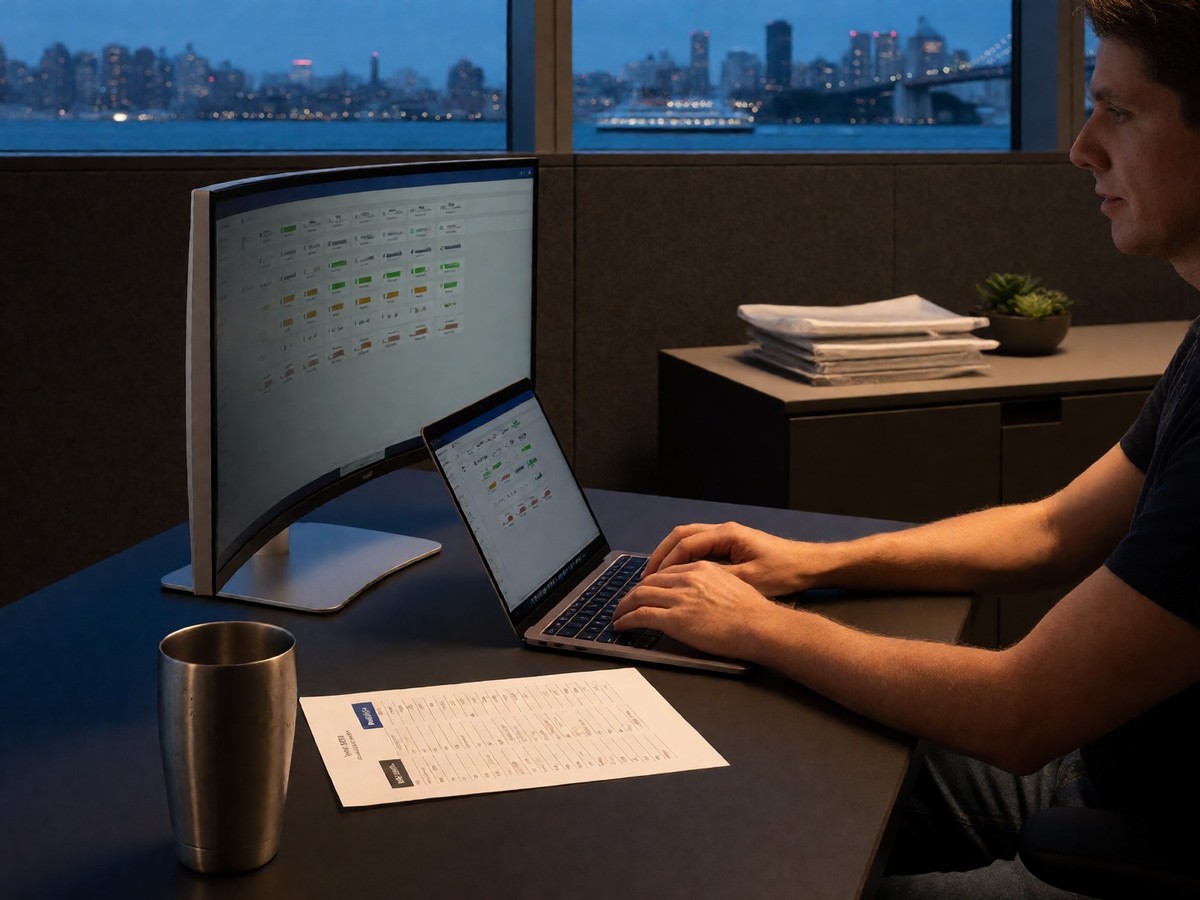
Windmill delivers the fastest total flow times for long-running tasks across Python, JavaScript, and Go. In benchmarks, Windmill performs 13x faster than Airflow. Temporal remains a close contender by achieving top throughput in Go multi-worker scenarios due to high worker utilization. Windmill handles high-frequency, lightweight workloads with competitive completion times because its optimized caching and parallel dispatch model minimizes overhead. Windmill uses nsjail for filesystem isolation and PID namespace isolation to prevent jobs from accessing worker process memory. Windmill provides a versatile engine that balances execution speed and reliable scaling patterns. Windmill supports various runtimes including Bun, Deno, and Python with uv for dependency management. Windmill developers can build complex UIs on top of scripts and flows. Windmill also allows users to turn scripts into webhooks or UIs. Windmill’s backend uses Rust to pull jobs from a Postgres queue. Windmill delivers competitive performance in both single-worker and multi-worker setups. How will the cost of growing storage affect long-term margins?
Isolation models for Cadence and Temporal
Cadence and Temporal provide similar durability guarantees through a workflow and activity model. Cadence remains a self-hosted only option through the Linux Foundation. You likely know that managing your own infrastructure requires significant effort, especially when scaling across many regions. Temporal provides a managed Cloud service that uses a cell architecture to isolate data plane resources. Temporal uses a cell architecture to isolate data plane resources by creating a dedicated AWS account for each cell which includes a VPC, an EKS cluster, and two databases to limit the blast radius. This architecture prevents a programmatic issue in one instance from having a ripple effect on other customers. Temporal Nexus improves security and fault isolation within the Cloud platform. Cadence requires teams to handle the manual mapping of SDK packages and concept renames during migrations. Cadence uses domains for providing each team its own isolated namespace with separate quotas and rate limits. The control plane manages data plane resources like provisioning and capacity allocation. Temporal handles the creation of namespaces by choosing a target cell, creating database records, and provisioning infrastructure artifacts. Temporal maintains 183,000 active users on its open source platform and 2,500 customers on its managed service.
Economic factors of durable execution
Temporal Cloud uses a consumption-based model. You pay for Actions, Storage, and a Support Plan. Actions track operations such as starting workflows, recording a heartbeat, or sending signals. The Essentials plan includes 1M Actions and 1GB of Active Storage for a $100 monthly minimum. Active Storage costs $0.042 per GBh after plan allocations. Retained Storage costs $0.00105 per GBh. The Business plan starts at $500 per month and includes 2.5M Actions and 2.5GB of Active Storage. The Business plan also includes SAML SSO and better support response times. Temporal limits single request payloads to 2 MB and Workflow Event History to 51,200 Events or 50 MB. Temporal Cloud Actions pricing for Pay-As-You-Go starts at $50 per million Actions. Windmill provides a Community Edition for free for internal use. Windmill also supports Python, TypeScript, Go, Bash, PowerShell, PHP, Rust, C#, and Java.
| Metric | Temporal Essentials | Temporal Business |
|---|---|---|
| Monthly Minimum | $100 | $500 |
| Included Actions | 1M | 2.5M |
| Active Storage | 1GB | 2.5GB |
| Retained Storage | 40GB | 100GB |

Technewsdaily
Senior tech writer covering AI, gadgets and cybersecurity. Breaking down the news that matters, every day.