The Mycroft Mark II fallacy for privacy seekers
Privacy seekers face limitations with the Mycroft Mark II because its reliance on the home.mycroft.ai backend and Google cloud services for speech-to-text mirrors the behavior of Amazon and Google. While Amazon holds 69% of the US market, local processing remains difficult to achieve.

The Hardware and Software Gap
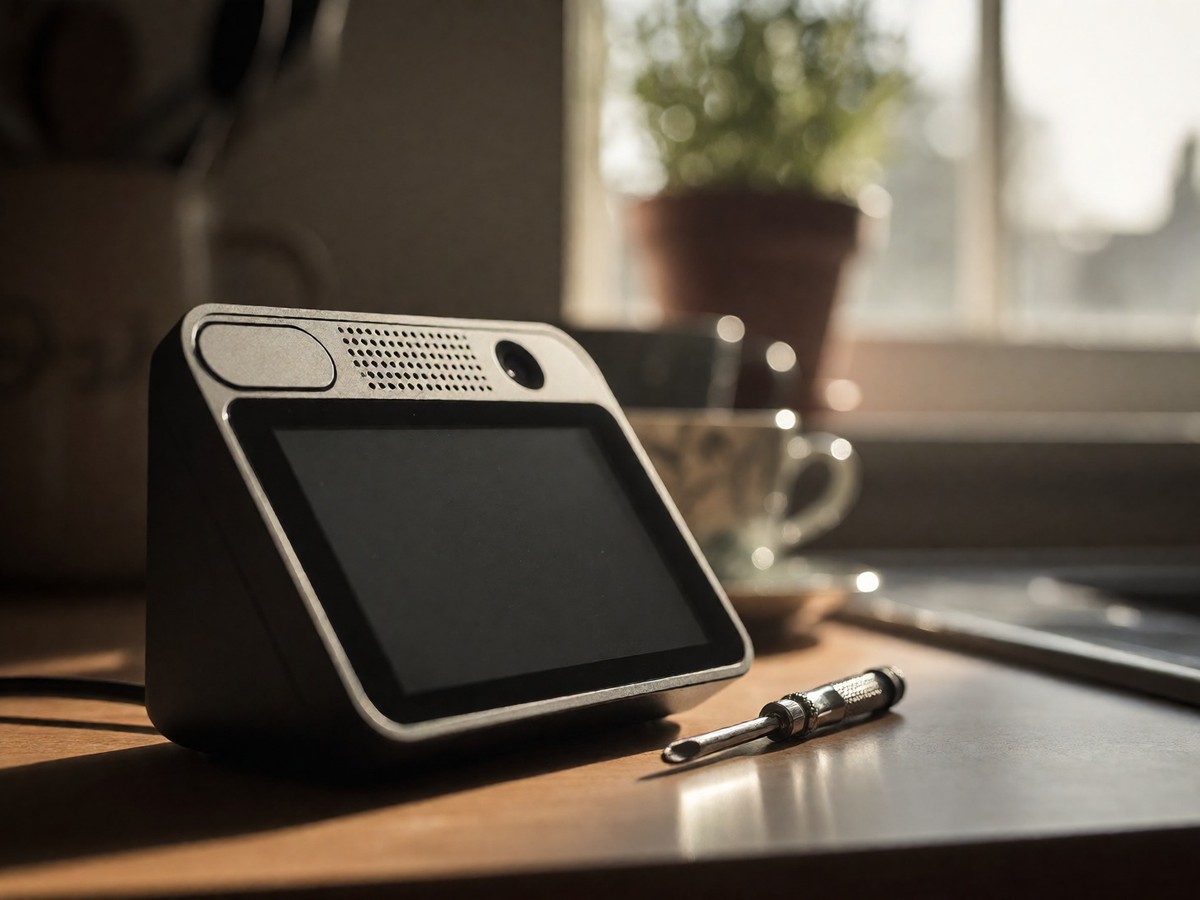
The Mycroft Mark II carries a $499 price tag, which creates a massive gap from the $129 Kickstarter price. This device runs Dinkum software, a stable operating system that diverges from the previous Mycroft Core software used by Picroft or the Mark I. If you expect your old Skills to function, they do not work on this new iteration. The lack of music integration remains a problem because Spotify revoked the API access Mycroft used for premium subscribers in 2020. While the hardware includes a 4.3 inch IPS touchscreen and a physical privacy shutter for the camera, the utility remains limited. The device uses Pantacor WiFi technology, which only detects 2.4GHz SSIDs and cannot handle the complexity of WPA2 enterprise networks. Users must also use a custom port and SSH keys to access the device, which creates a dependency on the home.mycroft.ai platform. The hardware uses a Xilinx quad-core processor and a 4 inch IPS LCD touchscreen. The six-microphone array uses beamforming and acoustic echo cancellation to isolate the speaker. This device is the first commercial product to use Deep Speech to understand English commands. The case is very sturdy, but you need a torx screwdriver to open it. The board is based on a Raspberry Pi 4, and the GPIO pins 1, 12, 13, GND, and 3.3V power are exposed for hardware integration. The device’s 1GB Ethernet RJ45 socket ensures you are not reliant on WiFi.
| Component | Specification |
|---|---|
| Processor | Xilinx quad-core |
| Display | 4.3 inch IPS LCD touchscreen |
| Audio | Dual 1.5 inch 5W drivers |
| Connectivity | WiFi (2.4GHz only), 1GB Ethernet RJ45 |
| OS | Dinkum |
The Privacy and Cloud Illusion
Privacy seekers often make the mistake of assuming open-source hardware ensures total data independence. The Mycroft Mark II relies on the home.mycroft.ai backend for pairing and security. Analysis of the code suggests the STT module uses Google cloud services, anonymized through the Mycroft platform. This creates a network dependency that mirrors the behavior of the giants privacy seekers attempt to avoid. The device uses the Silero VAD engine for wake word detection, and the provenance of its training data remains unclear. Intent parsing relies on Padatious, a neural-network based parser, while the Mimic 3 engine uses the ViTS algorithm for text-to-speech.
If you prioritize Apple HomeKit because you want on-device processing and end-to-end encryption for camera footage, you will find the Mycroft Mark II experience feels incredibly primitive by comparison. Apple processes much of its data locally, whereas Amazon stores Alexa voice recordings on its servers by default. Google Home offers better auto-delete controls for its recordings than Amazon, but its voice history still ties into a Google account. Amazon holds 69% of the US market with 31 million units, while Google holds 31% with 14 million units. There are growing concerns regarding how voice and video data are used to create realistic avatars, and many users do not want to contribute their voice data to these projects. I find the idea that a privacy-focused device can remain useful without a deep ecosystem of services to be a flawed premise. Is there any way to achieve true local intelligence without sacrificing the convenience of a massive cloud-based knowledge base?
The Automation and Ecosystem Trap
Choosing a voice assistant as the primary brain of a smart home leads to a pile of cloud gadgets. The industry has reached the trough of disillusionment because voice interfaces fail to deliver reliability when the internet connection drops. I recommend you use a local hub like Home Assistant to manage your devices instead of relying on the cloud logic of Alexa or Google. You should treat the voice assistant merely as a way to input commands rather than a master controller. This is the discovery problem: users do not know what an interface can do, so they never maximize its utility.
The most successful setups use Matter and Thread to avoid being trapped in a single ecosystem. Amazon Alexa provides the widest device support and the lowest entry cost, especially with the Echo Pop priced around $40. Google Home fits Android users well and handles conversational commands through Gemini for Home. Apple HomeKit remains the leader for privacy, though its device list is more selective and it does not support Z-Wave. Amazon Alexa has a built-in Zigbee hub in premium models, while Google lacks a Zigbee radio in its hubs and requires a separate controller. Apple uses Thread. You should pick based on your phone and privacy, not on device count.

Technewsdaily
Senior tech writer covering AI, gadgets and cybersecurity. Breaking down the news that matters, every day.