The people shaping Home Assistant and the Open Home Foundation
Paulus Schoutsen founded Home Assistant in 2013, leading a 28-person team supported by Nabu Casa. The project maintains open standards for Zigbee, Matter, and Thread while managing 1.7 million Z-Wave devices through community-driven development.

The Foundation and the Team
Paulus Schoutsen founded Home Assistant in 2013. He began this work after he wrote code to interact with Philips Hue bulbs during his time as a visiting scholar at UCSD. He used Python extensively while he completed his MSC thesis. The project team includes 28 individuals. Nabu Casa, which Schoutsen also founded, provides the money for development through cloud service subscriptions and hardware sales. This financial model allows the project to progress without pressure from external investors. The company sells the Home Assistant Green for $99. This device targets the "outgrower" audience. These users recognize their desire for a smart home and seek solutions to the limitations they find in Amazon or Apple products.
| Hardware | Price | CPU | RAM | Storage |
|---|---|---|---|---|
| Home Assistant Green | $99 | RK3566 | 4GB LPDDR4x | 32GB eMMC |
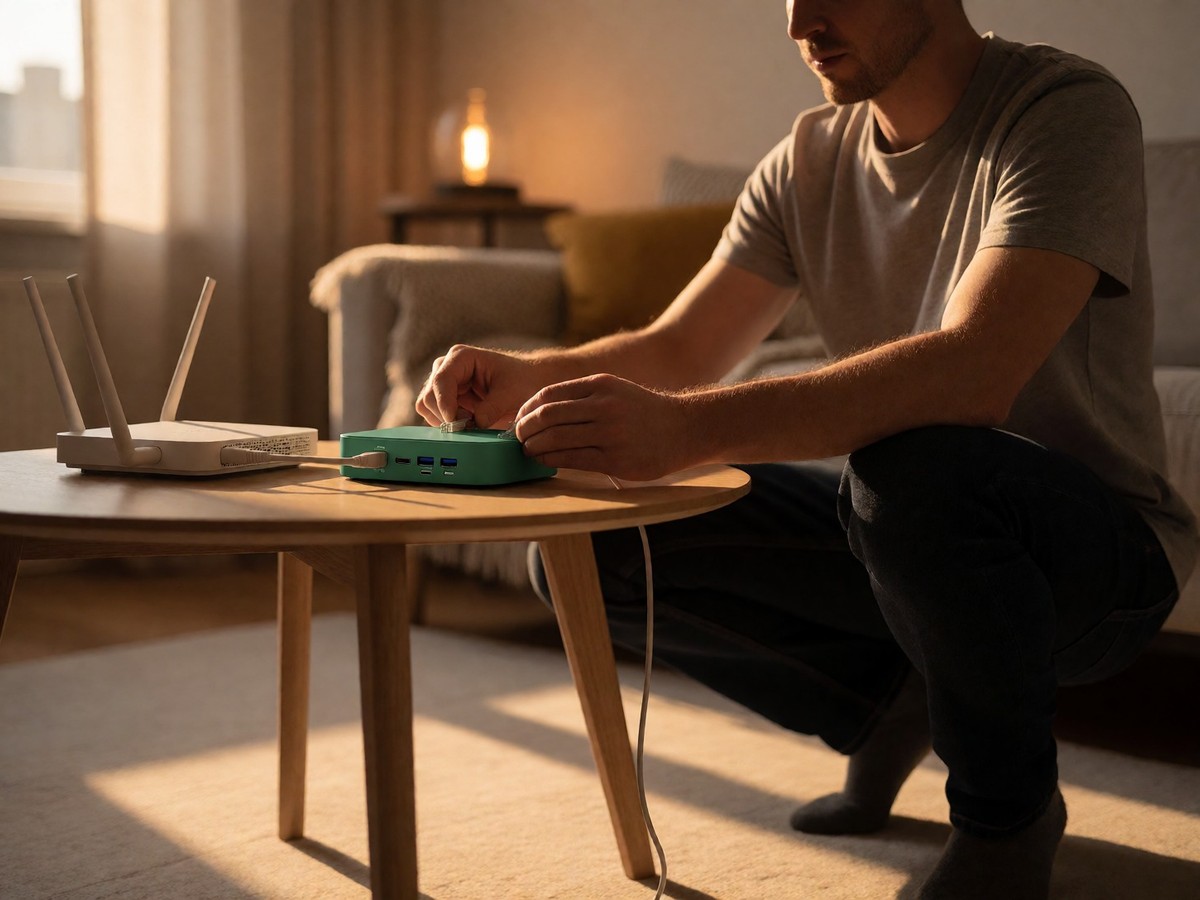
The Green hardware has a quad-core RK3566 CPU, 4GB of LPDDR4x RAM, and 32GB of eMMC storage. It includes USB 2.0 ports, an HDMI output, and a microSD slot. The device works exclusively with the Home Assistant Operating System. It is not a versatile computer like a Raspberry Pi. Users plug in the provided power adapter and connect the unit to a router via Ethernet. They then complete the setup process using a smartphone or another computer. The system detects compatible devices on the network automatically. The Home Assistant Yellow costs $200. The Green is a simple entry point for those who want to avoid the complexity of flashing a memory card, especially since you already know the basics of smart home setups. Schoutsen avoids hotels and offices to prevent feature bloat.
Connectivity and the AI Policy
Paulus Schoutsen is a member of the Z-Wave Alliance board to represent Nabu Casa. Home Assistant users operate 1.7 million Z-Wave devices. This is 10% of the total Home Assistant user base. The community created the Z-Wave JS stack. The team also produces SkyConnect hardware. The Z-Wave Alliance is a Standards Development Organization that is defined by its members. The representation of Home Assistant provides a link between the community and the development of Z-Wave standards. The project supports open standards such as Zigbee, Matter, and Thread. Nabu Casa won the Innovation Enabler Award from the Thread Group. The Open Home Foundation released an AI policy for all Home Assistant projects. This policy allows developers to use AI tools for LLM assisted coding. However, the policy requires that developers understand the code themselves. All communication must be human to human. This rule prevents people from using autonomous AI agents to submit pull requests if they do not know how the code works.
The project is limited to residential use. Schoutsen says that expanding to offices would require rigorous access control and would slow down the addition of new features. He also avoids business domains because companies assume he wants to enter those markets for financial potential. The project lacks investors that push it away from home automation. Will the project eventually expand into commercial sectors?
The Global Community and Language
Home Assistant is the second most active open-source project on GitHub. The project relies on a global community of contributors. Python is the most used language for these developers. Python has surpassed JavaScript on GitHub because of its use in machine learning and data science. The GitHub Octoverse 2024 report shows that Home Assistant core is a top choice for contributors. Contributions to generative AI projects on GitHub increased by 59%. New generative AI projects increased by 98%. Jupyter Notebooks saw a 92% growth. Deb Nicholson, the Python Software Foundation executive director, says the goal is for Python to be a tool that helps the developer community build the world they envision. This popularity continues across other platforms like the TIOBE Programming Community Index.
The global developer community grows in many places. India is projected to be the largest developer population by 2028. India has seen a 28% year-over-year growth. Nigeria has 28% growth and Brazil has 27% growth. In the Asia-Pacific region, Indonesia has 23% growth and the Philippines has 29% growth. Developers also rely on GitHub Actions for CI/CD pipelines, and usage grew by nearly 30% year-over-year. Tools like GitHub Copilot helped first-time contributors.

Technewsdaily
Senior tech writer covering AI, gadgets and cybersecurity. Breaking down the news that matters, every day.