LobeChat 1.0 and the team AI choice
Teams evaluating LobeChat 1.0 must weigh its 505+ agent roles against the costs of local inference. While Ollama offers free API access, running an RTX 4090 can incur monthly amortization costs of up to $56 alongside electricity expenses.

LobeChat provides a modern, extensible chat interface with 505+ agent roles and 40+ plugins. Teams evaluating LobeChat 1.0 for their workflows must weigh the benefits of its 505+ customizable agent roles and 40+ plugins against the streamlined, lightweight, and cross-platform deployment model that NextChat provides for power users. LobeChat contains a Role Market where users select preferred dialogue agent roles. This marketplace allows for the sharing of personalized agent configurations. The interface supports Markdown rendering, code highlighting, LaTex formulas, and Mermaid flowcharts. I find the lack of centralized plugin discovery in LobeChat a disadvantage compared to the visible plugin index in NextChat. LobeChat also allows one-click deployment via Vercel for developers. NextChat provides a compact client of about 5 MB and works on iOS, macOS, Android, Linux, and Windows. It emphasizes compatibility with OpenAI-style APIs. Many teams choose ChatGPT Business over open-source alternatives. ChatGPT Business costs $20 per user per month when billed annually or $25 per user per month for monthly billing. This plan requires a minimum of two users and includes unlimited GPT-5.5 access. Large organizations opt for ChatGPT Enterprise. Enterprise pricing requires negotiation with OpenAI sales and usually demands an annual commitment with a minimum of 150 users.
| ChatGPT Plan | Monthly Price | Primary Model |
|---|---|---|
| ChatGPT Go | $8 | GPT-5.3 Instant |
| ChatGPT Plus | $20 | GPT-5.5 |
| ChatGPT Business | $20 – $25 | GPT-5.5 |
| ChatGPT Pro ($100) | $100 | GPT-5.5 Pro |
| ChatGPT Pro ($200) | $200 | GPT-5.5 Pro |
Local inference and the cost of Ollama
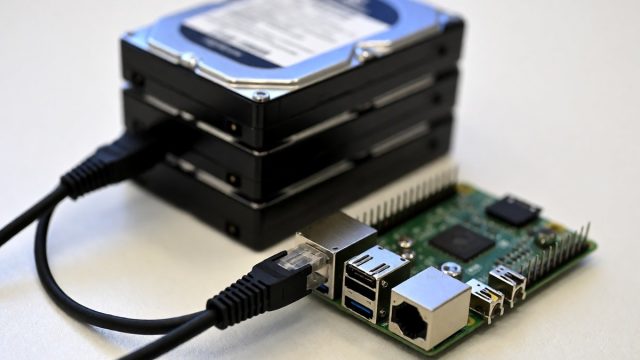
Ollama provides a web server and API for running open-source models like Llama 3.1 or Qwen2.5 on local hardware. I use Ollama when I want to run models on a single beefy machine that connects to various edge devices. OpenClaw v2.1 supports Ollama through a direct command. However, the "free" label on local AI ignores the costs of electricity and maintenance. An RTX 3090 running a 14B model costs between $14 and $18 per month in electricity. An RTX 4090 card costs between $1,500 and $2,000, which results in a monthly amortization cost of $42 to $56 over three years. Maintenance for Ollama takes about 30 minutes per month, while OpenClaw updates take about one hour. You should test these models side by side to see which responds faster. Total monthly costs for a local setup can reach $233 when including hardware, power, and time. I see a massive performance gap between local and cloud. Llama 3.1 8B on complex OpenClaw tasks has a success rate of approximately 40% to 50%. This fails for multi-step research. On managed cloud with Claude Sonnet 4.6 or GPT-5.4, failure rates drop to under 5%.
| Factor | Local Ollama Setup | Managed Cloud (Blink Claw) |
|---|---|---|
| API Fee | $0 | Usage-based credits |
| Electricity | $14 – $18/month | Included |
| Maintenance | ~1.5 hours/month | Managed by provider |
| Success Rate | 40-50% on complex tasks | < 5% on complex tasks |
The rise of agentic workflows
The industry is moving from simple chatbots to autonomous workers. In April 2026, OpenAI released GPT-5.5 and launched Workspace Agents to handle tasks like software review. Google responded at Cloud Next 2026 by introducing the Gemini Enterprise Agent Platform. Anthropic also released Claude Mythos between April 20 and April 22 for cybersecurity tasks. These releases signal that the era of the simple assistant is over. LobeChat supports this transition with its plugin system and agent orchestration. LobeChat can use plugins for web extraction and real-time weather updates. Amazon committed $25B to Anthropic in April 2026 to deepen its AI partnership. Meta and Microsoft announced workforce reductions of 10% and 7% respectively in late April. This shows that companies use AI to replace operational roles. LobeChat contains a Role Market where users select preferred dialogue agent roles. What happens when agent autonomy exceeds human oversight? LobeChat maintains a plugin index that users can access through the platform.

Technewsdaily
Senior tech writer covering AI, gadgets and cybersecurity. Breaking down the news that matters, every day.