DuckDB for analytical workloads: comparing SQLite and PostgreSQL
DuckDB utilizes a vectorized execution engine to outperform pandas and Spark on analytical workloads. While SQLite excels at lightweight transactions, DuckDB provides superior speed for column-aggregate queries on datasets in the gigabyte range.

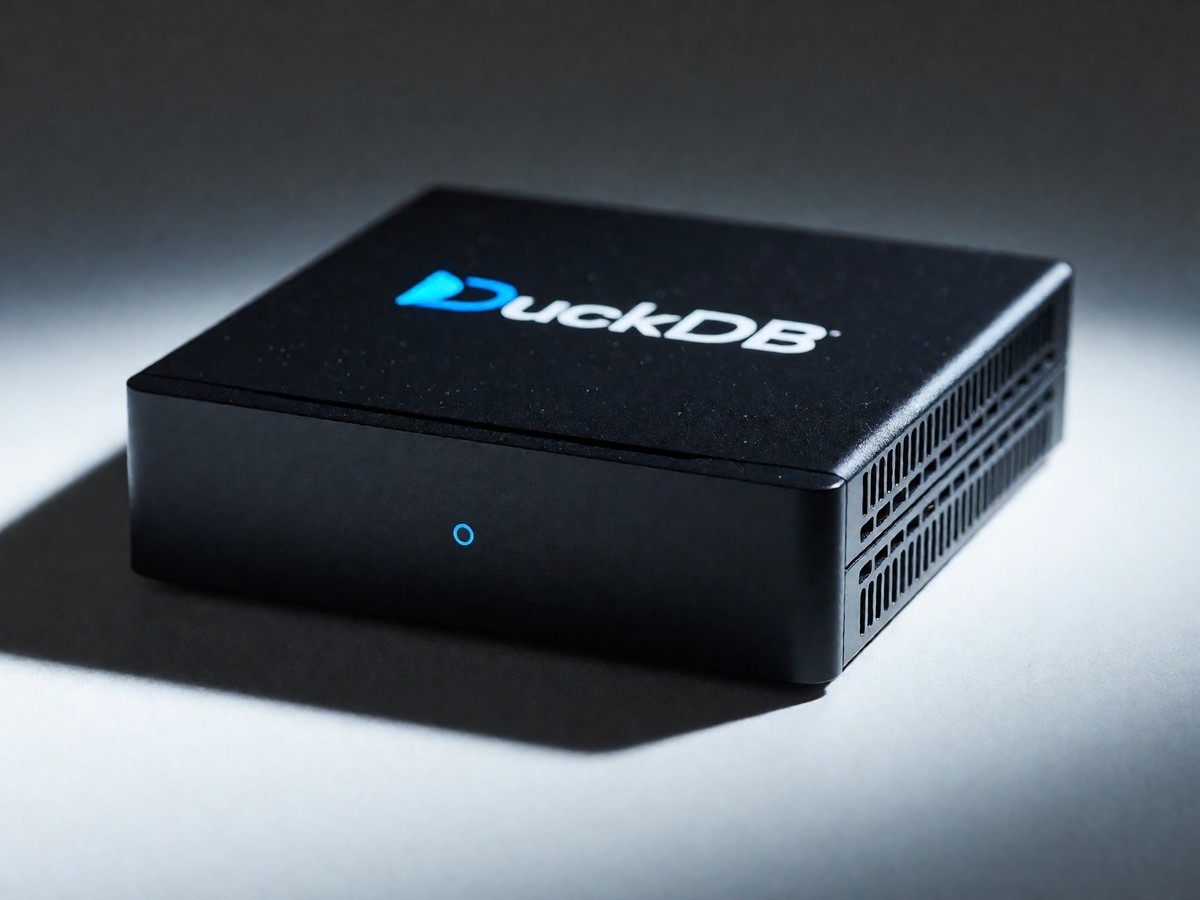
The vectorized architecture of DuckDB
DuckDB functions as an in-process SQL OLAP database. It uses a vectorized execution engine to process batches of data at once. This design helps DuckDB outperform pandas and Spark in certain scenarios. The engine uses multiple CPU cores for parallel query execution. A group-by aggregation on a 5GB dataset finishes in seconds because the system distributes work across multiple CPU cores instead of relying on a single processor. SQLite remains a row-oriented engine that processes data sequentially. This makes SQLite slower for the column-aggregate queries required for deep analysis.
DuckDB provides the speed of pandas with the scalability of Spark. It runs in-process and keeps data in memory but spills to disk when needed. This flexibility helps with large datasets. One user reported memory issues when importing 400 million rows of log data into DuckDB. This 180GB dataset worked without issue in SQLite. However, SQLite is slower for the column-aggregate queries needed for that data. DuckDB is designed for query processing rather than updating data in production environments.
The DuckDB 2.0 "Cinnamon Teal" release contains features built from nearly 20,000 commits since the 1.5 version, including a polished version of the Quack protocol and asynchronous I/O for reading remote files from object storage. The name comes from a reddish-brown duck found in the western Americas. This release introduces a modern, extensible PEG-based parser. This parser avoids the shift/reduce conflicts that the older YACC/Bison parser could face. The new parser allows extensions to hook into the grammar itself. The 2.0 release also includes a revamped C API v2 that exposes file systems and table functions to extensions. Developers should note that DuckDB 2.0.1 reverted a change to MERGE and UPDATE … FROM semantics because it caused a significant performance regression.
Data integration and workflow efficiency
Data teams use DuckDB to query Parquet and JSON files directly. DuckDB reads Parquet metadata first and then uses HTTP range requests to fetch only the columns the query requires. This method works for S3, GCS, and Cloudflare R2. The DuckDB 2.0 "Cinnamon Teal" release adds asynchronous I/O for Parquet and CSV files. This I/O layer scales independently from the query processing layer. It issues background reads to keep multiple requests in flight. This provides more parallelism for remote reads on object storage.
The VARIANT type stores schema-less data like JSON while keeping columnar performance. DuckDB detects common structures in the data and shreds them to improve compression and execution speed. The Delta extension supports time travel and the creation of Delta tables. The Iceberg extension supports the REST catalog ATTACH option, the GEOMETRY type, and MERGE INTO statements.
Python users can query pandas DataFrames directly without exporting files to CSV. This removes the need for memory copying and speeds up prototyping. In tests with a 100-row table, DuckDB was four times faster than pandas. DuckDB also allows the registration of custom Python functions inside SQL queries. This lets users combine the power of Python with SQL analytics. The system also supports window functions for tasks like calculating rolling averages. It also supports data-modifying CTEs which let users use INSERT, UPDATE, DELETE, and COPY as pipeline steps. Users can also utilize JSON mutation functions like json_set and json_insert to modify documents. The $variable shorthand also allows users to write $x in most places where an expression is allowed.
Decision logic for data teams
Choosing between these tools depends on the specific workload. SQLite is ideal for lightweight transactional workloads in mobile or desktop applications. It uses a compact, zero-configuration model. SQLite in WAL mode allows a single concurrent writer and unlimited readers. DuckDB is designed for query processing, not high-concurrency transaction processing. It is not a substitute for distributed systems like Snowflake or ClickHouse when scanning petabytes of data.
DuckDB excels when the median dataset size is in the gigabytes. PostgreSQL remains a robust choice for web development and complex data warehousing. DuckDB has 36,028 stars on GitHub and gained 531 stars in the last 30 days. PostgreSQL has 20,051 stars and gained 343 stars in the last 30 days. DuckDB provides high-speed data transfer because it is embedded.
| Feature | DuckDB | SQLite | PostgreSQL |
|---|---|---|---|
| Primary Workload | OLAP (Analytics) | OLTP (Transactions) | Relational/General |
| Storage Model | Column-oriented | Row-oriented | Row-oriented |
| Execution | Vectorized/Parallel | Sequential | Row-based |
| Deployment | In-process | In-process | Client-server |
Data scientists use DuckDB for interactive analysis and edge computing. You know the basics of SQL, so focus on how these engines differ in execution. DuckDB version 1.5.3 introduced the Quack protocol for client-server setups. This protocol allows any DuckDB process to serve its databases. The CONNECT statement allows users to attach and switch to a remote database in a single command. DuckDB 2.0 also includes an agent mode for coding agents like Claude Code and Cursor. This mode prints compact Markdown tables instead of padded boxes and reports errors as JSON. Long-running SQL queries report their expected cost prior to running so the agent can decide whether to wait. Can the Quack protocol match the stability of PostgreSQL for massive production workloads?

Technewsdaily
Senior tech writer covering AI, gadgets and cybersecurity. Breaking down the news that matters, every day.