History of Backstage as platform engineering teams adopt Spotify’s open-source developer portal
Spotify's Backstage, now a CNCF incubation project, centralizes software catalogs and infrastructure tooling to streamline development. It uses a docs like code approach and React-based UI to standardize workflows, enabling teams to manage thousands of services while maintaining autonomy.

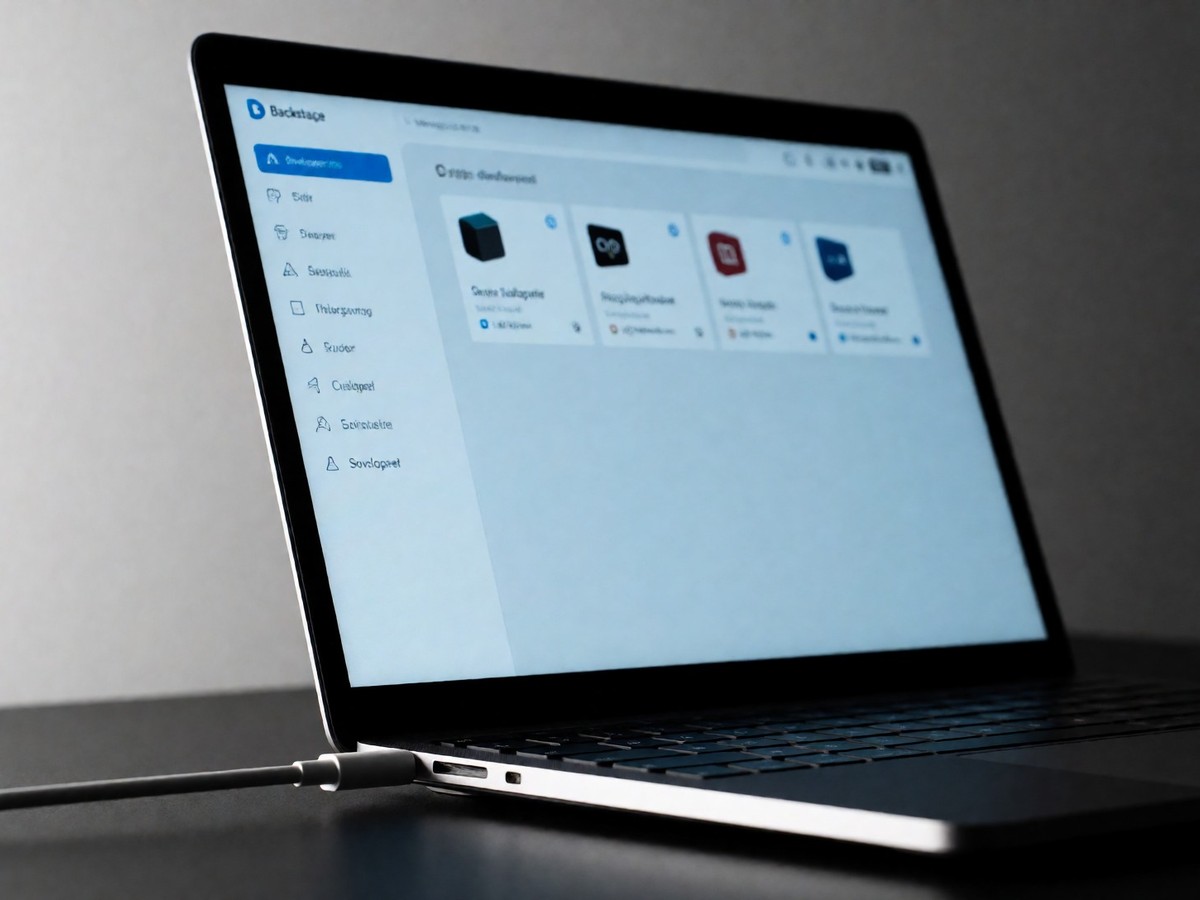
Spotify created Backstage to solve a specific problem: autonomous development teams were generating fragmented, complex software ecosystems that slowed down shipping. The solution was a centralized software catalog that restores order to microservices and infrastructure without compromising team autonomy. By standardizing tooling, the platform frees engineers from infrastructure complexity so they can focus on building and scaling quickly. This approach allows one team to manage ten services easily, while enabling an entire company to manage thousands of them. Every service, library, website, or ML model gets tracked with its owner, dependencies, and related resources like deployments and pull request status.
From internal tool to CNCF incubation
Backstage began as an internal framework at Spotify but has since grown into a widely adopted open source project. It is now hosted by the Cloud Native Computing Foundation (CNCF) as an Incubation level project after graduating from Sandbox. The core value proposition remains consistent: it unifies all infrastructure tooling, services, and documentation to create a streamlined development environment from end to end. For engineering managers, this means maintaining standards and best practices across the organization, helping manage the whole tech ecosystem from migrations to test certification. For developers, it provides a central place to manage all projects and documentation in a standardized way. Platform engineers benefit from extensibility and scalability, allowing them to integrate new tools via plugins or extend existing functionality.
The technical implementation relies on a "docs like code" approach for TechDocs, where engineers write documentation in Markdown files right alongside their code. This ensures that updating code naturally includes updating documentation, keeping both in sync within the same workstream. Finding any TechDoc becomes a simple search query rather than a hunt through disparate systems. The search capability extends beyond the Software Catalog; users can index any source, including Confluence and Stack Overflow, creating a comprehensive knowledge base. New hires and seasoned employees alike can search the infrastructure instead of getting lost in it. However, the system requires active maintenance; if teams do not keep their metadata current, the catalog’s utility diminishes rapidly.
Templates, UI consistency, and plugin ecosystem
Software Templates are a standout feature, allowing engineers to spin up new microservices with organizational best practices built-in from the start. A single button click can create a Spring Boot project with the repository automatically configured on GitHub and CI already running the first build. Organizations can customize these recipes for different stacks, such as Go instead of Java, CircleCI instead of Jenkins, or GCP instead of AWS. When the right way is also the easiest way, engineers get up and running faster and more safely. Each project automatically receives a TechDocs site, reinforcing the documentation-first culture.
Backstage UI is a design system built with React, TypeScript, and vanilla CSS, installed by default on every instance. It uses a layered neutral scale from 0 to 4, where each level nests inside the previous one to automatically increment background depth. Components like Card, Button, and Text are adaptive, adjusting colors and borders to match the surface they live on without extra configuration. Box, Flex, Grid, and Card form the foundation of every layout, offering utility props that map directly to design tokens. This structure handles visual hierarchy automatically, preventing inconsistent styling across plugins. The system encourages using provided components directly rather than creating custom ones, ensuring accessibility features like keyboard navigation and screen reader support remain intact.
The plugin ecosystem further expands customizability, with options like the Lighthouse plugin for scalable website testing and the Tech Radar plugin for framework recommendations. Building internal plugins tailors the version of Backstage to specific infrastructure needs, while open source contributions benefit the entire community. The Kubernetes monitoring tool is designed around the needs of service owners, not cluster admins, providing an aggregated view of all deployments without digging through CLI logs. Since Backstage uses the Kubernetes API, it is cloud agnostic, working no matter which provider or managed service is used, even in multi-cloud organizations. You don’t have to switch dashboards when moving from local testing to production. Does this level of standardization stifle the creative freedom that originally drove the adoption of autonomous teams?

Technewsdaily
Senior tech writer covering AI, gadgets and cybersecurity. Breaking down the news that matters, every day.