Ingress NGINX migration and Traefik 3.3 stability
The retirement of the Ingress NGINX Controller forces teams to migrate to alternatives like Traefik, which handles 80% of real-world usage patterns via native annotation support. Traefik 3.3 remains a popular choice for stability following version 3.4 release issues.

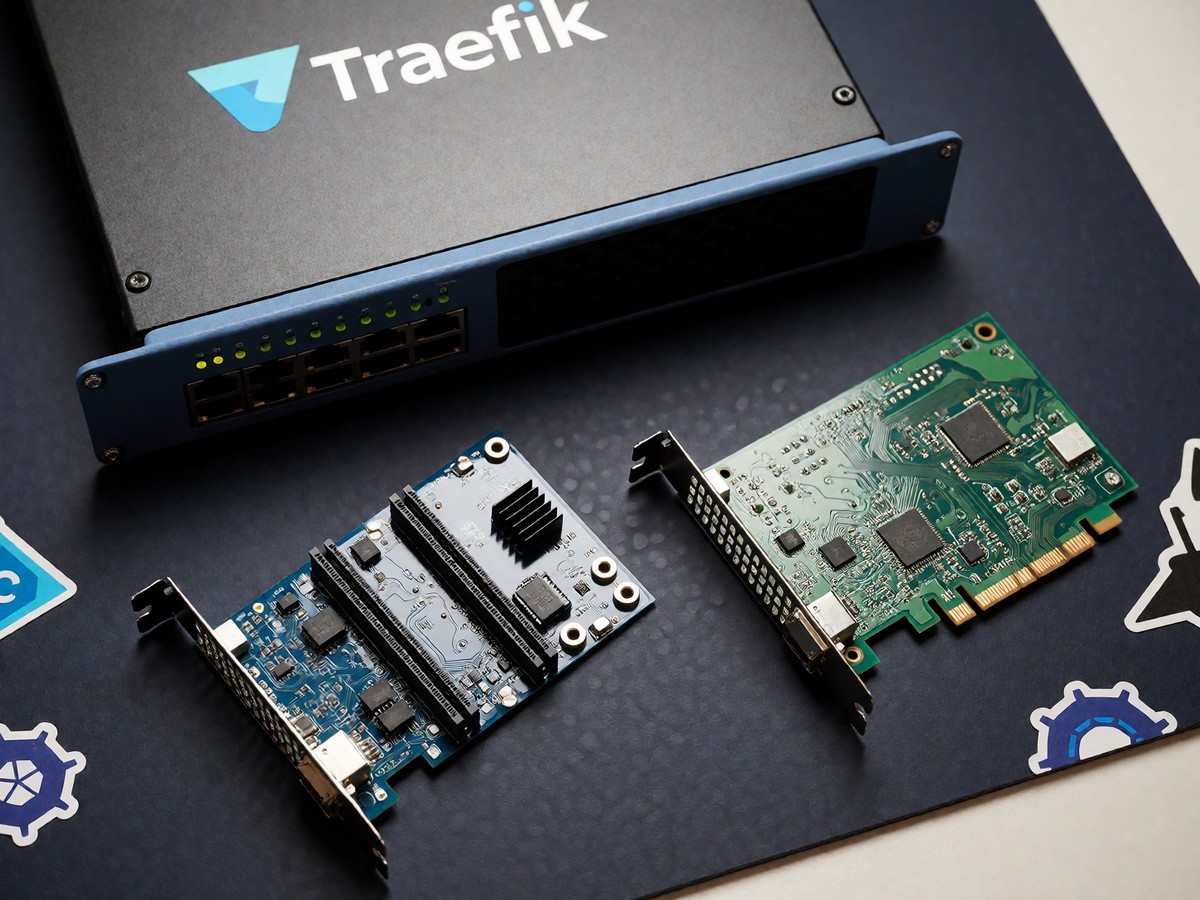
The March 2026 retirement of the Ingress NGINX Controller removed security updates and bug fixes for all production workloads. This deadline forced teams to move away from the most deployed ingress controller in the ecosystem. The #IngressNightmare vulnerabilities demonstrated how attackers could compromise entire clusters through malicious configuration injection, making this retirement an urgent necessity for security-conscious teams. Because the Traefik NGINX Provider handles 80% of real-world usage patterns through native support for custom annotations, teams can migrate from Ingress NGINX without rewriting every single existing configuration or testing new ingress objects. Some users in October 2026 report 404 errors when upgrading from Traefik 3.3 to 3.4, which causes them to pin their container images to version 3.3 to avoid accessibility issues. This specific version stability makes Traefik 3.3 a temporary refuge for those avoiding the latest release bugs. Traefik 3.6 also has full conformance to the Kubernetes Gateway API v1.4, providing a path toward modern networking once the 3.4 stability issues resolve. Organizations facing a 120-day deadline have a choice between immediate decommissioning via Traefik or a long-term migration to the Gateway API.
Nginx versus Caddy performance and configuration
Caddy automates TLS certificate management through Let’s Encrypt or ZeroSSL on the first request. This process eliminates the need for separate cron jobs or renewal hooks. Users avoid the 2am incidents caused by silent renewal timer failures. Nginx requires a separate ACME client and manual configuration of certificate paths. This added complexity creates an orchestration problem when managing fifty or more dynamic hostnames. You probably know that Nginx has dominated the market for over a decade.
Nginx delivers 48,000 requests per second for HTTP workloads, while Caddy reaches 42,000. Nginx uses 32 MB of memory at 10,000 connections, whereas Caddy requires 58 MB. On a 512 MB VPS, the memory gap between the C-based Nginx and the Go-based Caddy is a real consideration for small instances. Nginx 1.25.1 deprecated the listen 443 ssl http2; syntax, though Nginx 1.25.0 includes HTTP/3 in official Linux binary packages. Caddy has HTTP/3 built in and enabled automatically whenever HTTPS is active. Caddy is the best choice for greenfield services where TLS automation solves the recurring pain of certificate management. Nginx is the best choice for high-scale production or legacy environments where the team has deep expertise. Nginx has built-in rate limiting and TCP/UDP stream blocks, while Caddy requires compiling custom binaries with xcaddy to use third-party plugins like rate_limit or layer4.
| Metric | Nginx | Caddy |
|---|---|---|
| HTTP Requests/sec | ~48,000 | ~42,000 |
| Memory at 10k conns | ~32 MB | ~58 MB |
| TLS/SSL | Manual (Certbot) | Built in |
| HTTP/3 | Experimental | Built in |
Traefik positioning and the final choice
Traefik uses Go to prevent memory-safety bugs like the heap buffer overflow that Nginx patched in July 2026. This 9.2 critical vulnerability had been present in Nginx since 2011. Traefik also automates service discovery using container labels, which simplifies deployment in Docker and Kubernetes. Nginx requires manual configuration for every new service. Traefik 3.6 also has Knative support for serverless functions and multi-layer routing for context-aware traffic decisions. With 3.4+ billion downloads and 58,000 GitHub stars, Traefik is a battle-tested tool for modern environments. Traefik Hub also allows organizations to publish and secure containers through a single dashboard, removing the manual configuration of DNS and routing rules.
Nginx is the best for high-traffic production websites and legacy stacks. Caddy is the best for small teams with a few services or homelabs. Traefik is the best for Docker and Kubernetes stacks that require auto-discovery.
If a team needs to handle dozens of dynamic hostnames with on-demand TLS, Caddy is the easiest solution. If a team needs fine-grained control over request-time logic via Lua, Nginx is the only choice.
Which team can afford the engineering hours to reconfigure every annotation for the Gateway API?
| Use Case | Nginx | Caddy | Traefik |
|---|---|---|---|
| Low memory VPS | Yes | No | No |
| Easy TLS | No | Yes | Yes |
| Docker Labels | No | No | Yes |
| High RPS | Yes | No | No |

Technewsdaily
Senior tech writer covering AI, gadgets and cybersecurity. Breaking down the news that matters, every day.