Navigating tech services and IT spending
The global IT professional services market is projected to reach USD 2,152.0 billion by 2033. Managed IT services in 2026 are expected to cost between $100 and $300 per user per month depending on the specific pricing model used.

The global IT professional services market reached USD 988.7 billion in 2025. This figure will grow from USD 1,075.7 billion in 2026 to USD 2,152.0 billion by 2033, maintaining a CAGR of 10.4%. North America held a 38.9% revenue share in 2025, while the Asia Pacific region anticipates the highest CAGR between 2026 and 2033. Automation for everyday tasks drives this expansion. In 2025, the reactive IT services segment led the market. The application management segment and the AI and ML segment both held the largest revenue shares. The on-premises segment also held the largest revenue share in 2025. On June 12, 2025, an invalid automated quota update to the API management system caused Google Cloud to suffer a global outage. This incident disrupted 54 products, including Google App Engine and Vertex Gemini API, for over seven hours. While Google Cloud recovered most regions within two hours, the quota policy database in us-central1 became overloaded, which forced a recovery period of two hours and forty minutes. Because the Service Control tasks restarted, they created a herd effect on the underlying infrastructure. The incident also hit dependent platforms like Spotify and Discord. Governments support digital shifts through programs like the Canada Digital Adoption Program, which invested USD 4 billion to help small and medium-sized enterprises adopt digital technologies. Amazon Web Services expanded its infrastructure with 30 new local zones across 16 cities in the U.S. to assist in expanding computing and storage services. Professional service firms provide consultation, audit and accounting, implementation support, and financial risk protection. They provide analytic capabilities and a foundation for managing business information. The IT & telecom segment held the largest revenue share in 2025. The rollout of 5G networks drives the demand for IT services in this segment. The rise in cyber breaches across various industry verticals drives the demand for IT services from companies seeking better security.
Managed IT pricing models
Managed IT services in 2026 cost between $100 and $300 per user per month. CloudSecureTech reports a national midpoint of $142 per user, while VC3 lists packages from $150 to $400. You already know that these numbers change based on your specific environment. I find the idea of paying for idle capacity in fixed-fee models completely irrational. Traditional per-user or per-device models force you to pay for a team sized to peak demand, even during quiet months. Break-fix work costs between $125 and $350 per hour. In Boston, providers quote between $100 and $250 per user per month. Most businesses pay between $150 and $200 per user per month.
| Pricing Model | What you pay for | Best Use Case |
|---|---|---|
| Per-device | A monthly fee per laptop or server | Stable, device-heavy estates |
| Per-user | A monthly fee per person | Mobile, cloud-first workforces |
| Tiered bundles | Service levels (Bronze/Silver/Gold) | Simple choices with fixed budgets |
| Flat fee | A single price for an agreed scope | Predictable workload needs |
| Consumption | Actual usage (compute, storage) | Cloud-heavy clients |
| Outcome-based | Results (uptime, resolution) | High ticket volume/variable demand |
Companies often use hybrid models. For example, combining per-user pricing for support with consumption-based billing for cloud infrastructure helps balance flexibility and control. Allied uses a Flexible Resource Architecture that relies on a shared specialist pool and a digital worker layer. Their FusionWork system achieves an auto-resolution rate of over 84%. Onboarding often requires an additional fee equivalent to one month of service. If you buy a tier, you might pay for capabilities you do not need. For companies with low margins, consumption-based pricing remains the most prevalent model. This model allows costs to flex with business activity.
Sales and service level agreements
Tech sales professionals like Sales Development Representatives and Account Executives sell complex technology solutions. These roles require understanding technical specifications and industry trends. To succeed, they focus on solving customer problems instead of just listing features. Effective training involves mastering communication and negotiation. B2B tech sales often requires 6 to 8 touches to generate a viable lead. Customer Success Managers ensure clients achieve value post-sale to encourage renewals. Successful sellers use CRM systems and social selling on platforms like LinkedIn.
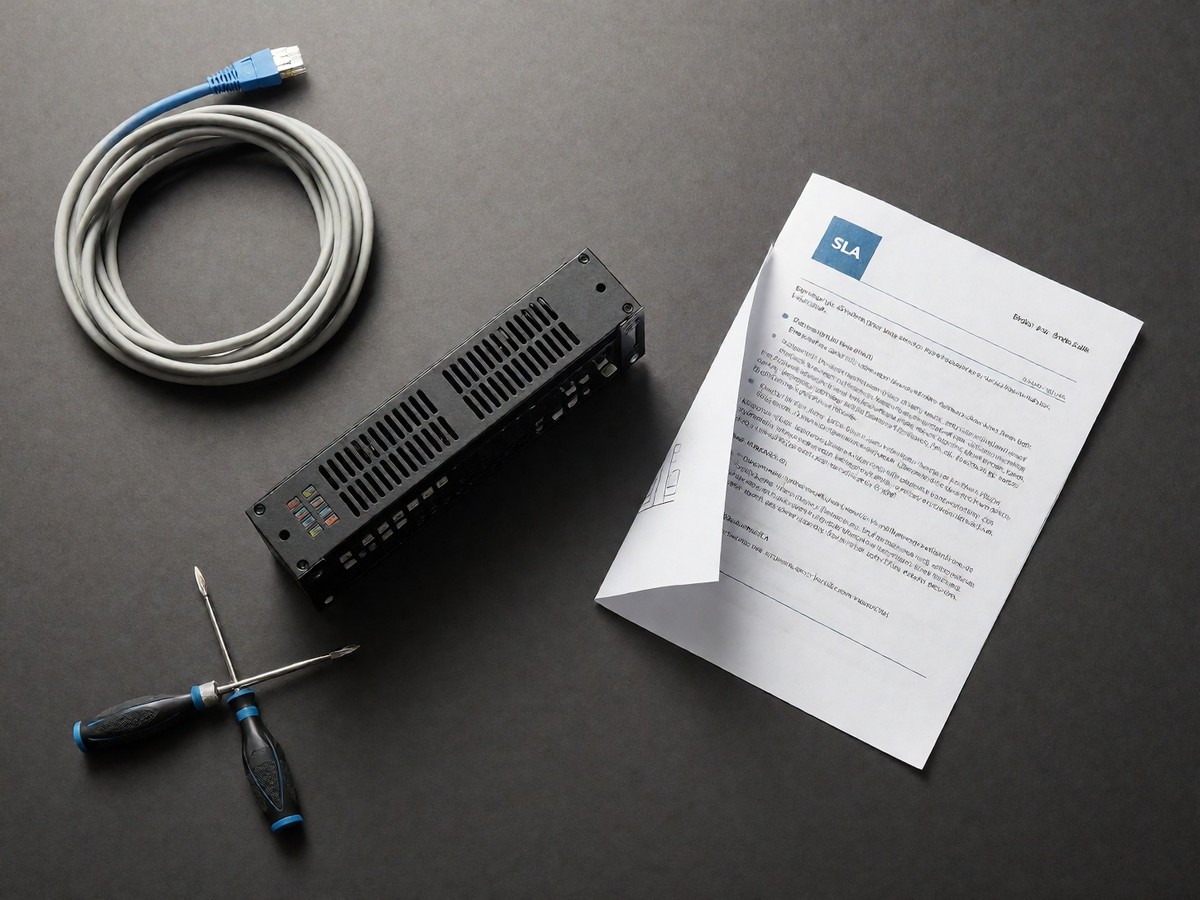
Service Level Agreements (SLAs) define the performance metrics and responsibilities between providers and clients. These contracts include uptime requirements, response times, and acceptable error frequencies. A Snyk report from 2022 found that 80% of companies faced a cloud security event within the previous year. The Verizon 2026 Data Breach Investigations Report found that ransomware appeared in 48% of all breaches, while small and mid-sized businesses comprised approximately 96% of those ransomware victims. SLAs can be customer-based, internal, or multilevel. Providers handle infrastructure maintenance, backups, and troubleshooting.
Downtime costs money. ITIC’s 2024 survey indicates that downtime costs small businesses between $10,000 and $25,000 per hour. Some cases reach $75,000 per hour, which threatens the survival of an SMB. Sophos reported the average recovery cost for a ransomware attack at $1.53 million in 2025. What happens when your provider fails to meet the very uptime they promised in the contract?

Technewsdaily
Senior tech writer covering AI, gadgets and cybersecurity. Breaking down the news that matters, every day.