Paperless-ngx versus DocuWare and Mayan EDMS for beginners
Paperless-ngx offers a simple Docker setup for personal archives but its classifier fails above 8,000 documents. Mayan EDMS handles millions of files with asynchronous processing, making it better for complex organizational workflows requiring granular permissions.

Paperless-ngx runs on a Docker stack that includes Postgres, Redis, Gotenberg for document conversion, and Tika for text extraction. The system ingests scans via a "consume" folder or direct upload, then applies OCR to make the content searchable. I found the automatic classifier particularly useful; it tags correspondents and document types based on previous entries, though users with over 8,000 documents report the model file grows so large that classification stops working entirely. One user imported 6,000 documents per hour using an NVMe ZFS storage array, but noted that search performance degraded significantly when running multiple queries simultaneously on a 4 CPU, 8 GB RAM setup.
Choosing your deployment path
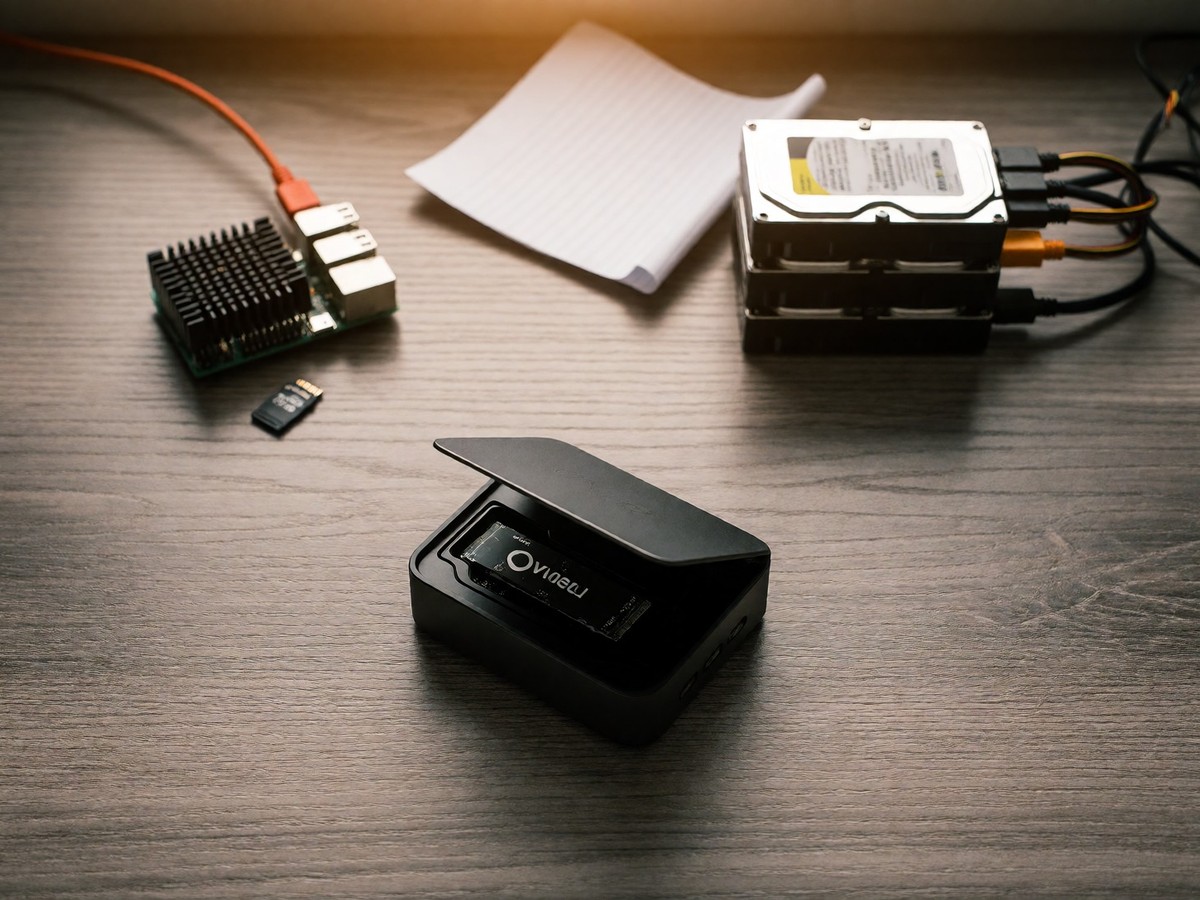
Self-hosting gives you full control but demands significant hardware attention. You can run the entire stack on a Raspberry Pi 4 with 4 GB of RAM, handling around 1,600 documents without issue. However, moving to a larger archive requires more power; one instance with 13,987 documents ran on an Intel Core i3 with only 4 GB of RAM, yet the classification model ballooned to 600 MB, breaking the automatic tagging feature. If you prefer to avoid server maintenance, hosted options like Elestio charge hourly credits for resources such as 2 vCPU and 4 GB RAM, with plans scaling up to 16 vCPU and 64 GB RAM. These providers handle TLS certificates and security patches, removing the need for you to manage updates or monitor uptime at 3 a.m.
Mayan EDMS takes a different architectural approach, splitting its source apps into separate modules for easier customization. It supports asynchronous event processing, which improves performance by orders of magnitude but means events might not process in the exact order they occurred. For installations with millions of documents, this system uses dedicated workers for search tasks to prevent indexing from slowing down other operations. The software also introduced a new structure for storing document source metadata, allowing you to track where files came from and who sent them directly within the document record. This level of granularity is useful for multi-tenant environments where each tenant needs distinct email profiles and access controls.
| Feature | Paperless-ngx | Mayan EDMS |
|---|---|---|
| Database | Postgres, MySQL, MariaDB | PostgreSQL, MySQL |
| OCR Engine | Tesseract (via backend) | Tesseract (with lineart transformation) |
| Deployment | Docker Compose | Docker Compose, Multi-container profile |
| Scalability Limit | Classifier fails >8,000 docs | Optimized for centi-million docs |
| Async Events | Standard task queue | Asynchronous mode with order variance |
I would recommend Paperless-ngx for most personal archives because the setup is straightforward and the community provides ready-made Docker configurations. The optional local AI add-ons, such as Paperless-GPT, allow you to use vision models for better OCR accuracy on tough scans without sending data to the cloud. Mayan EDMS is better suited for complex organizational workflows that require granular permission management and high-volume asynchronous processing. However, the complexity of managing multiple worker queues and database connections makes it less appealing for a single-user home server. Do you want to know how much disk space a 50,000-document archive actually consumes?

Technewsdaily
Senior tech writer covering AI, gadgets and cybersecurity. Breaking down the news that matters, every day.