How to get started with November 2026’s Eraser 0.28 surge
Eraser 0.28 adoption highlights a shift toward diagram-as-code tools that prevent documentation from diverging from actual code. Teams evaluate options like Excalidraw, tldraw, and Mermaid based on licensing, embedding needs, and automation requirements.

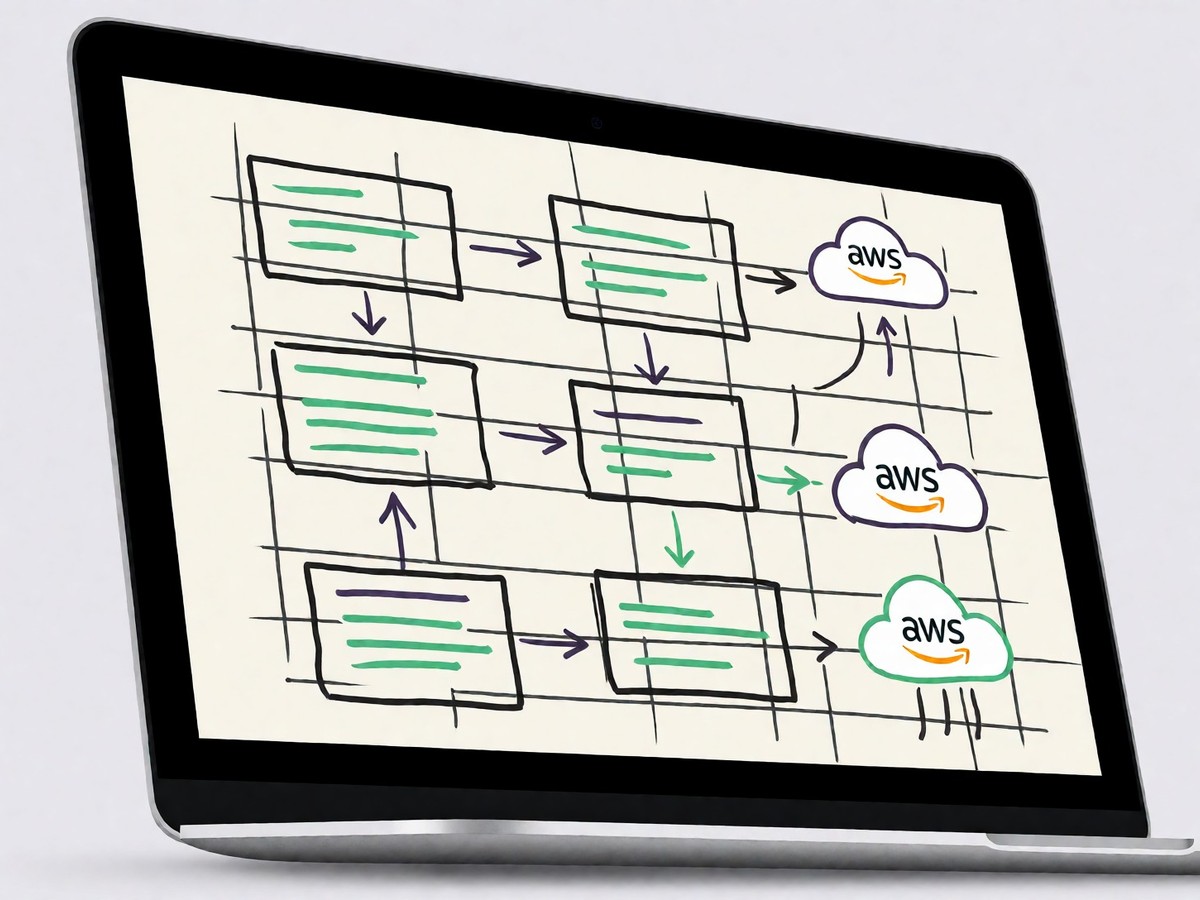
Excalidraw provides a free, MIT-licensed way to manage architecture sketches. The code is on GitHub with over 131,000 stars. You can self-host it on a $5 to $10 monthly VPS using Docker. You can also embed the @excalidraw/excalidraw npm package in a commercial product with no license key and no watermark. Excalidraw+ is a separate, hosted product for $7 per user monthly or $6 per user yearly. It provides unlimited scenes and folders, alongside team management. The free version at excalidraw.com keeps one scene in your browser storage and allows unlimited collaborators in end-to-end encrypted sessions. You can use its community libraries to import AWS icons or UML shapes with one click. The Excalidraw hand-drawn look is a reason many engineers prefer it for architecture sketches.
tldraw presents a different reality for developers. The tldraw SDK is source-available and requires a license key for production use. Since version 4.0 arrived in September 2025, the tool requires a 100-day trial, a commercial license, or a hobby license. The hobby license only works for non-commercial projects and forces a "made with tldraw" watermark onto the canvas. If your primary goal is to embed a whiteboarding capability into a custom React application, the tldraw SDK provides a highly polished engine, but you must budget for a commercial license to remove the mandatory watermark. Developers using tldraw must also manage their own sync backend, such as Cloudflare Durable Objects and R2, to handle multiplayer functionality.
Diagram-as-Code and Architecture
Teams move toward Eraser or Mermaid when they realize a flat canvas cannot capture the complexity of an architecture decision record. Eraser provides a diagram-as-code workspace with an infinite canvas and AI-drafted diagrams. It includes tech icons for AWS and GCP, and it integrates with GitHub and Notion. The popularity of the tool comes from its ability to turn sketches into organized technical documentation. Mermaid renders diagrams from text inside markdown files. This allows diagrams to live in the same pull request as the code. If you need more breadth, PlantUML provides a mature text-to-diagram tool for docs-as-code teams.
For those who want to automate documentation, repowise generates architecture maps and decision records from the repository. It uses an AGPL-3.0 license and runs locally for free. You can use repowise to find reasoning written in ADR files and commit messages. Repowise can parse 28 languages into a full AST to build a dependency graph. This ensures the system map stays current as the code changes.
| Tool | License Type | Primary Function |
|---|---|---|
| Excalidraw | MIT | Whiteboard application |
| tldraw | Source-available | React SDK |
| Eraser | Proprietary | Diagram-as-code |
| Mermaid | Open source | Text-to-diagram |
| PlantUML | Open source | Text-to-diagram |
The shift toward Eraser 0.28 shows that teams want diagrams that do not diverge from the actual code. Hand-authored tools like Mermaid are best when you are shaping a system. Derived tools like repowise are better when the code moves faster than people can redraw it.
Workflow and Persona
The choice between a sketch and a project determines your tool stack. Excalidraw is a sketchpad for quick, informal diagrams. It has a hand-drawn aesthetic that is easy to deploy. Because tldraw is an SDK, it is a building block for developers. Miro is a workshop platform for large teams. It has 2,500 templates and tools for voting and timers. Miro’s Starter plan costs $8 per user per month, and the Business plan costs $20 per user per month. If you run a remote workshop with 20 people, Miro is the logical choice.
You should test the exact service your team intends to use. You can use Excalidraw in Jitsi Meet without a second account because Jitsi embedded the engine directly. For design-heavy work, FigJam is $3 per editor per month for the Professional plan. Penpot is an open-source design platform with a flat monthly fee of $175 for unlimited team members. Storyflow is an alternative for when a sketch needs to become a real, persistent project. It uses an AI that reads the whole board. Will the rise of diagram-as-code eventually make the infinite canvas obsolete?

Technewsdaily
Senior tech writer covering AI, gadgets and cybersecurity. Breaking down the news that matters, every day.