The engineering of a global standard
D. Richard Hipp created SQLite to solve critical software failures on the DDG-79 Oscar Austin battleship. Today, the engine powers over 4 billion smartphones and maintains extreme reliability through 248.5 million pre-release tests.

A solution for a battleship
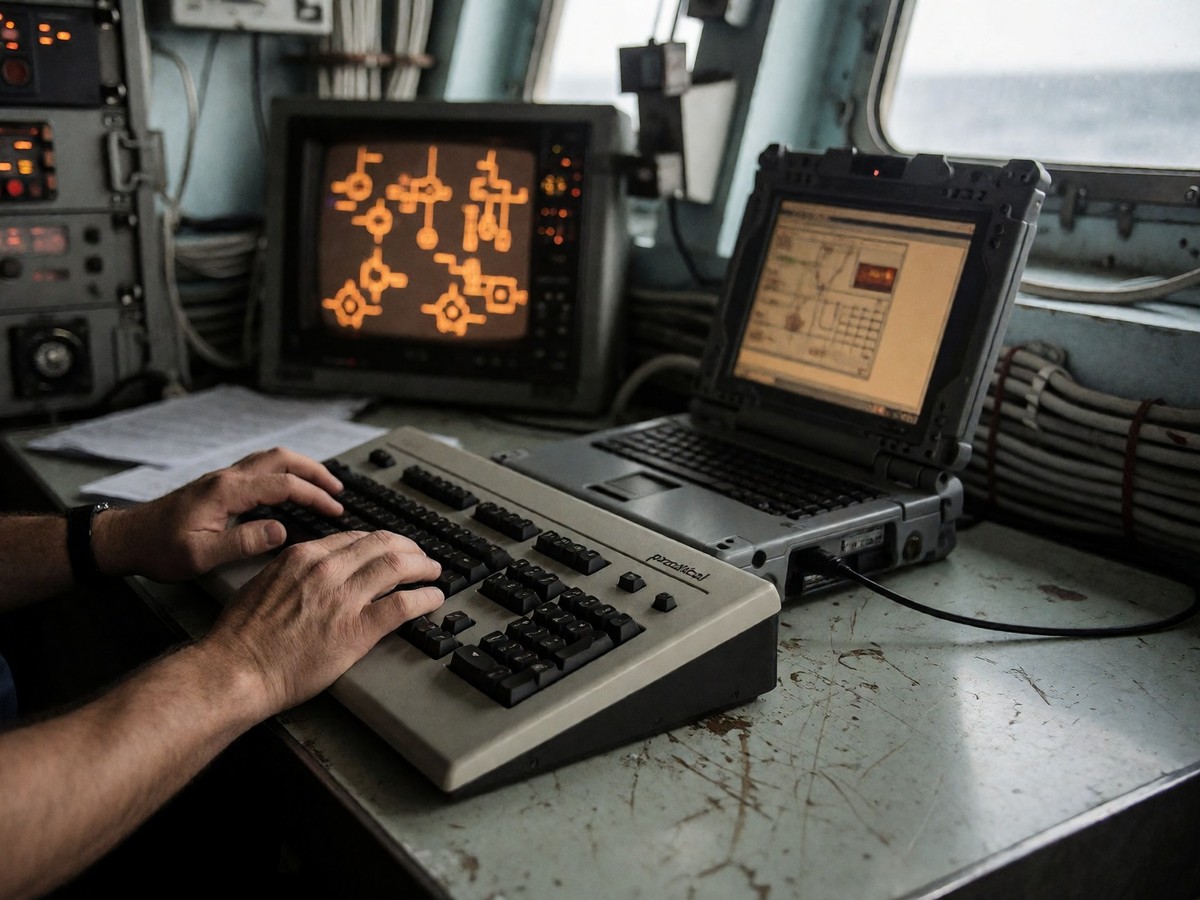
D. Richard Hipp developed SQLite to resolve software failures on the DDG-79 Oscar Austin. The guided-missile destroyer relied on Informix for its Automated Common Diagrams program. This program helped sailors locate valves to isolate damage when pipes ruptured. Because the problem involved an arbitrary directed graph, it was NP-complete. The existing software often ran forever or chewed up CPU cycles trying to find an optimal solution. When the Informix server went offline, the application displayed a "Can’t connect to database server" error. Hipp’s team received the blame for these errors because they designed the user interface. This was unacceptable on a warship in combat. Hipp realized the system needed a way to pull data directly from the disk without a server dependency. He built a byte code engine and a compiler to achieve this.
The software works.
In 2001, Motorola reached out to Hipp to include SQLite in their new cell phone operating system. He provided a quote of approximately $80,000 for the enhancements.
Reliability in billions of devices
SQLite is the most widely deployed database engine on the planet. It exists in over 4 billion smartphones and powers more than one trillion active databases. Every iPhone, Android, and Windows 10 installation includes the software. It also runs in browsers like Chrome, Firefox, and Safari. Airbus uses the engine in the A350 XWB flight software to meet DO-178B safety standards. The Airbus team requested support for the entire life of the airframe, which lasts 40 years. The developers respond by planning to support SQLite until 2050. WhatsApp uses it to manage data for 2.5 billion users. The application stores all data in an encrypted SQLite database with the decryption key on the user device.
It is everywhere.
The testing regime is extremely strict. The team maintains 100 million lines of test code for 160,000 lines of production code. They run 248.5 million tests during pre-release soak tests. They also perform fuzz testing with billions of malformed inputs. This rigor explains why the team stopped receiving bug reports after the software moved to Android. You probably use it every day without realizing it.
The code is in the public domain.
Performance and technical limits
SQLite 3.53.4 remains the stable release as of July 24, 2026. The engine provides full ACID compliance through journaling or Write-Ahead Logging. Because the library runs in the same memory space as the application, it completely avoids the network latency and the heavy serialization overhead that slow down traditional client-server databases like MySQL. The engine is a single file on disk that contains the entire database. Hipp even coded the B-tree algorithm from Donald Knuth’s work while traveling on a plane.
| Feature | SQLite 3.53.4 |
|---|---|
| Release Date | July 24, 2026 |
| Library Size | ~250 KB |
| Deployment | Embedded/Serverless |
| Single-user Read Speed | 2.72 microseconds |
| Write Mode | Single-writer lock |
In testing, SQLite completed sequential SELECT queries 4.9x faster than MySQL. This advantage exists because SQLite eliminates network serialization overhead. Reading and writing 10KB files is 35% faster with SQLite than using individual files on a filesystem. SQLite also uses 20% less disk space than individual files. However, the single-writer lock remains a constraint. This lock serializes all write operations to ensure data integrity. This makes the engine unsuitable for applications requiring thousands of concurrent writes per second. It is simple. Will the single-writer lock prevent growth in highly distributed environments?

Technewsdaily
Senior tech writer covering AI, gadgets and cybersecurity. Breaking down the news that matters, every day.